Leonardo da Vinci Birthday and Historical Significance
Leonardo da Vinci was born on 15 April 1452 in the village of Anchiano near Vinci, Italy. He was the only child of Ser Piero da Vinci, a notary, and Caterina Lippi, a peasant woman.
Leonardo became a renowned artist, inventor, engineer, and thinker, known for his diverse talents and contributions to art and science. He did not receive traditional schooling but pursued studies through experimentation and apprenticeships.
His legacy is celebrated globally, including in Australia, where galleries and universities host exhibitions and educational programs highlighting his artistic and scientific achievements.
Date and Commemorative Events in Australia
Leonardo di ser Piero da Vinci was born on 15 April 1452 in Anchiano, near the town of Vinci in present-day Italy. In Australia, this date is regularly observed through various commemorative activities organised by both governmental and private art galleries. These events typically include thematic exhibitions and educational programmes dedicated to Leonardo da Vinci’s enduring legacy.
Notable exhibitions have been held across the country, such as the 2005 presentation at the National Gallery of Victoria in Melbourne, which featured “Leonardo da Vinci: The Drawings”—an exhibition showcasing authentic drawings from European collections. Between 2006 and 2007, the Australian Museum in Sydney hosted the travelling exhibition “Leonardo da Vinci Machines,” displaying working models of machines based on Leonardo’s designs. Further, from 2011 to 2013, the interactive exhibition “Da Vinci – The Genius” toured Melbourne, Sydney, and Perth, highlighting his inventions, anatomical studies, and artistic works.
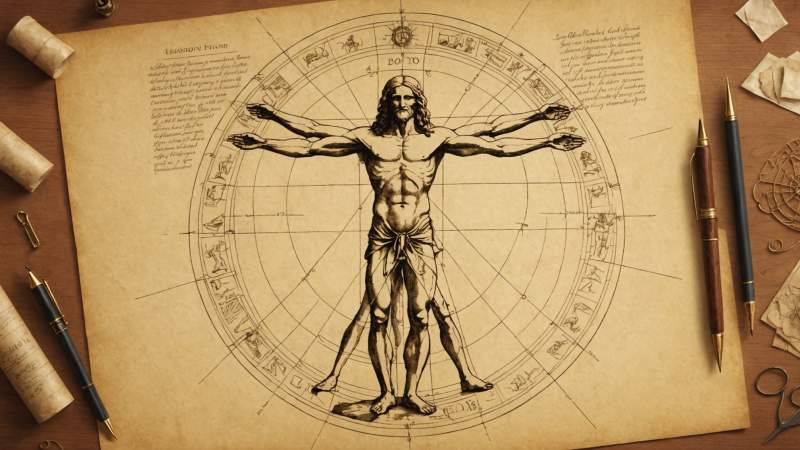
In 2019, marking the 500th anniversary of Leonardo da Vinci’s death, Australian universities including the University of Melbourne and the University of Sydney organised public lectures and seminars exploring his influence on science and art. Additionally, Australian physicist Paul T. Calligan and engineers at the University of New South Wales have utilised Leonardo’s “Vitruvian Man” drawing as an illustrative tool in biomedical engineering courses, emphasising proportions and biomechanics.
Educational initiatives extend to younger audiences as well. In 2013, Perth’s SciTech museum introduced a programme for schoolchildren focused on Leonardo’s inventions and mechanical principles, demonstrated through models of his machines. Moreover, reproductions of Leonardo’s “The Last Supper” are incorporated into senior school curricula in New South Wales and Victoria, particularly in art history and religious studies.
Leonardo’s parachute design is also featured in popular museum and exhibition displays on the history of parachuting, recognised as an early project in controlled descent. Throughout the 2010s, the Queensland Museum in Brisbane hosted temporary exhibitions dedicated to Leonardo’s anatomical drawings and the evolution of scientific illustration. Australian art schools affiliated with universities, such as the Queensland College of Art and the Victorian College of the Arts, integrate Leonardo’s methods of studying anatomy and chiaroscuro into their academic drawing programmes, ensuring his techniques continue to influence contemporary artistic education.
Early Years and Education
Leonardo da Vinci was born into the family of Ser Piero da Vinci, a notary and later chancellor of Florence, and Caterina Lippi, an unmarried peasant woman. He was their only child. Unlike many of his contemporaries, Leonardo did not receive a traditional formal education during his youth. Instead, he devoted much of his early years to experiments, research, and keeping detailed journals. At the age of 14, in 1467, Leonardo moved to Florence to become an apprentice to the renowned artist Andrea del Verrocchio. This apprenticeship marked the beginning of his formal artistic training. By 1472, Leonardo had advanced sufficiently to join the Florentine Guild of Painters, a significant step in his professional development.
Creative Work and Professional Activity
Leonardo da Vinci was a multifaceted figure renowned as an artist, inventor, thinker, and engineer. His creative and professional endeavours spanned various disciplines and locations throughout his life. In 1481, he began work on the painting “Adoration of the Magi” for the monastery of San Donato, marking one of his early significant artistic projects. The following year, in 1482, Leonardo relocated to Milan, where he expanded his professional scope by working as an engineer, architect, sculptor, and painter.
One of Leonardo’s most celebrated works, “The Last Supper,” was completed in 1495 and displayed in the refectory of Santa Maria delle Grazie. Around 1503, he commenced the iconic portrait known as the “Mona Lisa,” which remains one of the most famous paintings in history. A related work, “Monna Vanna,” is recognised as a nude version of the “Mona Lisa” and was created by Salai, Leonardo’s pupil and long-term servant. Notably, Salai inherited the “Mona Lisa” after Leonardo’s death.
Leonardo’s professional activities were not limited to the arts. In 1502, he was employed by Cesare Borgia as a military engineer and cartographer, demonstrating his versatility and technical expertise. Between 1513 and 1515, Leonardo lived and worked in Rome, serving the Pope and contributing to several papal projects. His reputation and skills earned him the title of “First Painter, Engineer, and Architect to the King” from King Francis I of France in 1516. Following the death of Giuliano de’ Medici, Leonardo received a pension and an estate near the royal palace in Amboise from Francis I. Despite suffering paralysis in his right hand, Leonardo continued to teach and paint, underscoring his enduring dedication to his craft and profession.
Scientific Research and Inventions
Leonardo da Vinci’s scientific research and inventive genius were marked by his relentless pursuit of knowledge, even in the face of significant obstacles. Despite the papal prohibition against human dissection, Leonardo continued to study human anatomy and physiology, greatly expanding contemporary understanding of the human body. His detailed and accurate anatomical drawings remain a testament to his meticulous observation and artistic skill. Beyond human anatomy, Leonardo’s notebooks contain a diverse array of sketches, including depictions of the Virgin Mary, Saint Anne, cats, horses, dragons, and Saint George, alongside his anatomical studies.
Leonardo’s curiosity extended to natural phenomena and mechanical inventions. He produced drawings of floods and various machines, investigating the origins of water and the forces of nature. His notebooks, written in mirror script, encompass approximately 6,000 pages, reflecting the breadth and depth of his inquiries. Among his notable inventions was a parachute designed as a wooden pyramid covered with fabric, intended to slow descent. This concept was tested in the year 2000 and confirmed to be functional, underscoring Leonardo’s forward-thinking engineering.
In addition to his scientific and mechanical pursuits, Leonardo possessed exceptional musical hearing and believed in the intrinsic connection between music and visual art. He also held views on physiognomy, considering the human face as a revealing indicator of character. Collectively, these facets of Leonardo da Vinci’s work illustrate a polymath whose scientific investigations and inventive designs continue to inspire and inform centuries after his birth.
Final Years and Legacy
Leonardo da Vinci passed away on 2 May 1519 at the age of 67. His death marked the end of a remarkable life that left a lasting impact on various fields. The final years of Leonardo’s life concluded a period of extraordinary creativity and intellectual pursuit, culminating in a legacy that continues to be celebrated worldwide.