• World AIDS Day

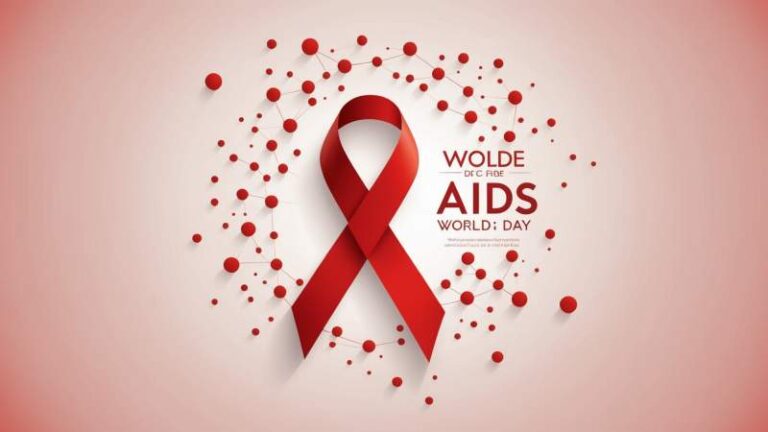
    World AIDS Day is observed every year on 1 December to increase awareness about HIV/AIDS and remember those who have died from the disease. Established in 1988 by the World Health Organization and the UN General Assembly, the day recognises achievements in expanding access to treatment and prevention. The red ribbon symbol, created in 1991, represents solidarity with people living with HIV. UNAIDS, a joint UN programme, supports global efforts in HIV prevention, treatment, and human rights advocacy. In Australia, HIV treatment has been available since 1996, with ongoing national strategies and community events like the Sydney Mardi Gras parade supporting the cause.


  • National Rubber Sandals Day

    National Rubber Sandal Day is observed annually on 2 December in New Zealand, recognising the cultural importance of rubber sandals, locally known as jandals. The footwear was invented in New Zealand, with production starting in 1957 by Morris Yock. The day encourages wearing jandals at work and supports Surf Life Saving New Zealand through donations. Research shows a predominance of left-footed sandals washing ashore, linked to local fishing practices.

  • International Day of Persons with Disabilities

    The International Day of Persons with Disabilities was proclaimed by the United Nations General Assembly in 1992 to promote the rights and well-being of persons with disabilities. It aims to raise awareness of the challenges faced by people with disabilities and encourage their full participation in society. The day follows the UN Decade of Disabled Persons (1983–1992) and aligns with the principles of the Convention on the Rights of Persons with Disabilities. Globally, 1.3 billion people live with some form of disability, facing barriers in education, employment, and social inclusion. In Australia, the day is observed with national awards and supported by legislation and programs such as the Disability Discrimination Act and the National Disability Insurance Scheme.

  • International Banking Day

    International Banking Day, established by the United Nations General Assembly in 2019, is observed annually on 4 December. The day recognises the significant role of banks in achieving the Sustainable Development Goals by 2030. Banks contribute to poverty reduction, social equality, and environmental sustainability. The UN encourages banks to invest in long-term projects and manage economic risks to support global development. In Australia, initiatives like the Australian Sustainable Finance Roadmap align the financial sector with these global objectives.

  • Sleep Lovers Day

    Sleep Lovers Day is an unofficial annual event held on 7 December that celebrates the value of sleep and relaxation. Originating as a humorous date, it has gained popularity among those who appreciate passive rest. The day encourages people to prioritise quality sleep, often by sleeping longer or enjoying restful activities like reading in bed. It serves as a reminder of the essential role sleep plays in physical health, emotional balance, and cognitive function. The observance also promotes awareness of healthy sleep habits and the need to balance work and rest.

  • International Anti-Corruption Day

    International Anti-Corruption Day is observed annually on 9 December, marking the anniversary of the 2003 United Nations Convention against Corruption. This convention, the first of its kind, criminalises bribery, embezzlement, and money laundering, and mandates the return of stolen assets. Corruption is a complex global issue affecting all countries and undermining economic development, governance, and peace. Australia ratified the convention in 2005 and actively participates in related national initiatives.

  • Nobel Day

    Nobel Day is observed annually on 10 December in Stockholm to commemorate Alfred Nobel, the Swedish chemist and inventor who passed away in 1896. Nobel, known for inventing dynamite and holding over 350 patents, established the Nobel Prize through his will to reward outstanding contributions in science, literature, and peace. The Nobel Prize ceremony includes awarding medals, diplomas, and monetary prizes to laureates, followed by a banquet and concert. The event highlights the importance of knowledge, humanitarianism, and global recognition of excellence.

  • Human Rights Day

    Human Rights Day is observed globally on 10 December, commemorating the adoption of the Universal Declaration of Human Rights by the United Nations General Assembly in 1948. Established officially in 1950, the day encourages states and organisations to promote human rights awareness. The Universal Declaration outlines fundamental political, civil, social, cultural, and economic rights inherent to all individuals. It has been translated into 577 languages and serves as the foundation for various international agreements. The UN Human Rights Prize, awarded every five years on this date, recognises outstanding contributions to human rights.

  • Poinsettia Day

    Poinsettia Day is observed annually on 12 December, commemorating the plant’s introduction to the United States by Joel Roberts Poinsett. Native to tropical Mexico and Central America, the poinsettia is widely recognised as a Christmas symbol due to its vibrant coloured bracts resembling stars. The plant’s flowering period spans from December to March, and it is popular in Australia as a festive decoration despite the summer season. Australian horticulture continues to develop new varieties with diverse bract colours, supporting its role in seasonal celebrations.

  • International Monkey Day

    International Monkey Day is an unofficial celebration dedicated to monkeys and other primates, originating as a student joke in 2000. It highlights the diversity of over 400 primate species found across tropical and subtropical regions globally. The day is marked by educational programmes in zoos and conservation efforts, including activities in Australian zoos such as Melbourne and Taronga. Animal advocates use the occasion to raise awareness about threats to primates, including habitat loss and wildlife trade. The event combines humour and education to engage the public, especially children, in learning about primate behaviour and conservation.

  • Cupcake Day Australia

    Cupcake Day Australia is an annual charity event organised by RSPCA Australia, held in August to raise funds for animal shelters through cupcake sales. The event encourages home and office baking and sharing of cupcakes and other cakes. Australian baking culture also embraces traditional Christmas fruitcakes, prepared weeks in advance and soaked in rum or brandy. These fruitcakes are a festive staple, often served with brandy butter or cream alongside other national desserts like lamingtons and pavlova. The event and traditions highlight the cultural significance of cakes in Australian celebrations and charity.

  • International Migrants Day

    International Migrants Day is observed annually on 18 December to raise awareness about the rights and contributions of migrants worldwide. Established by the United Nations General Assembly in 2000, the day coincides with the adoption of the International Convention on the Protection of the Rights of All Migrant Workers and Members of Their Families in 1990. Migration remains a significant global phenomenon driven by economic, social, and environmental factors. The day promotes information dissemination on migrant rights and encourages international cooperation to ensure safe, orderly, and regular migration. Australia actively participates in migration programs and supports migrant integration through legislation and community initiatives.

  • International Human Solidarity Day

    International Human Solidarity Day is observed annually on 20 December, following a United Nations resolution in 2006. The day highlights the importance of unity, mutual support, and shared responsibility as fundamental human values. It serves as a reminder to governments about their commitments to international agreements and promotes awareness of solidarity as essential for achieving development goals. The day also supports initiatives aimed at eradicating poverty, with backing from the UN Development Programme and the World Solidarity Fund. Various activities worldwide, including in Australia, focus on solidarity with vulnerable populations and advancing global development objectives.

  • National Gravy Day

    Gravy Day is an unofficial Australian celebration held on 21 December, inspired by Paul Kelly’s 1996 song ‘How to Make Gravy’. The song, a Christmas classic, tells the story of a prisoner named Joe writing to his brother about missing the festive season and mentions a traditional meat gravy recipe. The day honours this cultural reference with social media memes, music listening, and recipe sharing. Gravy, a meat sauce thickened with flour or starch, is a staple in Commonwealth Christmas dinners. The song’s influence extended to a 2024 film adaptation featuring notable Australian actors.

  • HumanLight Celebration

    HumanLight is a secular humanist holiday observed on 23 December, focusing on values such as reason, compassion, humanity, and hope. It was first celebrated in 2001 in New Jersey and officially recognised by the American Humanist Association in 2004. The holiday offers an alternative to religious winter celebrations, allowing secular humanists to celebrate positive human values without religious connotations. In Australia, HumanLight is increasingly observed with community events, candle lighting, and charitable activities, emphasising inclusivity and respect for diverse beliefs.

  • Christmas Eve

    Christmas Eve is observed on 24 December and marks the conclusion of the Advent season, a period of preparation for Christmas. Rooted in Christian liturgy and influenced by Jewish tradition, it commemorates the birth of Jesus Christ at midnight. Various customs include church services, family dinners, gift-giving, and folklore such as animals speaking at midnight. In Australia, Christmas Eve is celebrated with beach barbecues and unique local customs involving Santa Claus arriving on a surfboard.

  • Christian Christmas

    Christmas Day is celebrated on 25 December by Christian churches using the Gregorian or Revised Julian calendars. It is one of the most important Christian holidays alongside Easter and is a public holiday in over 100 countries. The date’s origin is uncertain, with theories linking it to the Annunciation or to supplanting pagan festivals. Traditions vary widely, including Advent observances, festive services, gift-giving, and cultural customs such as Australia’s beach barbecues and Sydney’s Christmas Fair.

  • South Australia Proclamation Day

    South Australia Proclamation Day commemorates the official establishment of the province within the British Empire on 28 December 1836 by Governor John Hindmarsh. The day is an official public holiday in South Australia, observed on 26 December to align with the national Boxing Day celebrations. South Australia was uniquely founded as a free settlement rather than a penal colony, based on Edward Wakefield’s colonisation plan. The proclamation ceremony took place at Holdfast Bay, near present-day Glenelg North, and the colony was intended to embody progressive British societal values.

  • St. Stephen's Day

    Saint Stephen’s Day, observed on 26 December, is a public holiday in many Western countries and follows Christmas Day. It commemorates Saint Stephen, the first Christian martyr and patron saint of various groups. In the United Kingdom and Commonwealth nations, the day is widely known as Boxing Day, associated with gift-giving traditions and major retail sales. Sporting events such as football, rugby, horse racing, and the Sydney to Hobart Yacht Race are also held on this day. In Australia, Boxing Day marks the start of summer and is an official public holiday featuring shopping and outdoor activities.

  • Paper Snowflake Day

    Paper Snowflake Day is observed on 27 December, recognising the traditional craft of paper cutting that began in China. This art form has spread worldwide and is popular in Australia, where paper snowflakes are used as festive decorations. The day is linked to preparations for Christmas and New Year celebrations. Creating paper snowflakes involves folding and cutting paper to produce unique designs, often as a family or school activity. These decorations enhance windows, trees, and interiors during the holiday season.

  • International Cinema Day

    International Cinema Day marks the first public screening of a film by the Lumière brothers in Paris on 28 December 1895. This event followed their patent of the cinematograph earlier that year. Cinema evolved from silent black-and-white films to sound, colour, and digital formats, influencing culture globally. Film festivals and awards, including those in Australia, celebrate cinematic achievements and the medium’s social impact.

  • International Cello Day

    International Cello Day is observed annually on 29 December, coinciding with the birthday of Pablo Casals, a distinguished Catalan cellist, conductor, and composer. Casals is recognised as one of the greatest cellists of all time and a pioneer in popularising the cello as a solo instrument. The cello, a bowed string instrument with a rich expressive range, plays a vital role in symphony orchestras and chamber music. Casals’ contributions include founding orchestras, composing notable works, and promoting music festivals. His legacy continues through international competitions and festivals held in his name.

  • Sodium Bicarbonate Day

    Sodium bicarbonate, commonly known as baking soda, is celebrated annually on 30 December. This white crystalline powder, with the chemical formula NaHCO3, has been used since ancient Egypt and was developed into soda ash by French chemist Nicolas Leblanc in 1791. It serves multiple purposes including baking, cleaning, deodorising, and health care. In Australia, sodium bicarbonate is approved as a food additive (E500) and widely used in households and the food industry.

  • Decision Day

    Decision Day is observed annually on 31 December, aimed at individuals who struggle with indecision. The day encourages making definitive choices without delay or excuses, symbolising a threshold to a new life as it coincides with New Year’s Eve. It promotes responsibility, prioritisation, and breaking down goals into achievable stages to avoid disappointment. The day also offers an opportunity to reassess priorities and commit to actions that bring decisions to fruition.

  • New Year's Eve

    New Year’s Eve is celebrated annually on 31 December worldwide, with origins tracing back to ancient Babylonian and Roman festivities. In Australia, the day is marked by reduced working hours and extensive preparations for the new year. Major cities like Sydney host large-scale fireworks displays, including family and midnight shows over the Harbour Bridge. Public celebrations often include street festivals, concerts, and outdoor gatherings, with safety measures and alcohol regulations in place. The summer season in Australia allows for outdoor festivities on beaches and parks.