Paper Snowflake Day and the Art of Paper Cutting
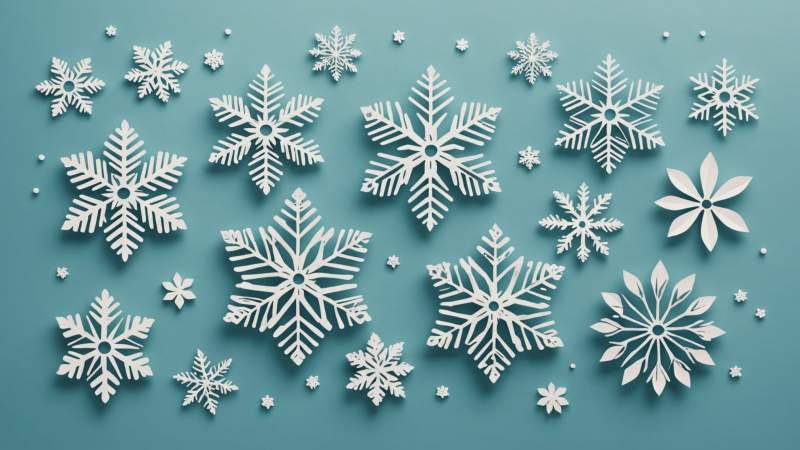
Paper Snowflake Day is celebrated annually on 27 December, marking a creative tradition connected to festive preparations. The art of paper cutting, which originated in China at the beginning of the Common Era, forms the basis of this craft.
This technique has become popular globally and is widely practised in Australia, where paper snowflakes are used to decorate windows, Christmas trees, cards, and interiors despite the summer season during Christmas.
The process of making paper snowflakes involves folding a sheet of paper multiple times, often in multiples of six, to achieve designs resembling real snowflakes. This activity is commonly enjoyed in families and schools, fostering fine motor skills and creativity.
Date and Significance of the Holiday
Paper Snowflake Day is celebrated annually on 27 December. This specific date was chosen to coincide with the period of preparation for the New Year and Christmas festivities. The timing highlights the holiday’s connection to the seasonal celebrations, marking it as a special occasion during the festive season. By situating Paper Snowflake Day at the end of December, it aligns with the broader cultural context of winter holidays, emphasising the decorative and celebratory role of paper snowflakes during this time.
Traditions and Characteristics in Australia
In Australia, paper snowflakes are widely used as a part of winter and Christmas decorations, despite Christmas occurring during the summer season in the Southern Hemisphere. These paper snowflakes are often crafted as part of family New Year’s décor, complementing other festive ornaments. The technique of paper cutting in Australia is associated with the Chinese art of jiǎnzhǐ, regarded as one of the oldest forms of decorative paper craft. Beyond snowflakes, Australians frequently create various other shaped paper cutouts to enhance the holiday interior atmosphere. In schools and children’s clubs across the country, paper cutouts serve as simple creative activities aimed at developing children’s precision and imagination. During the pre-Christmas period, paper snowflakes and other cutouts are commonly used to adorn windows and rooms, contributing to the seasonal festive spirit.
History and Spread of the Art of Paper Cutting
The art of paper cutting originated in China at the beginning of the Common Era. This traditional craft, which involves creating intricate designs by cutting paper, has a long and rich history rooted in Chinese culture. Over time, the technique of paper cutting spread across the globe, evolving into a popular form of artistic expression in many different cultures. Today, paper cutting is recognised worldwide as a creative and accessible art form, celebrated for its delicate beauty and the skill required to produce detailed patterns.
Technique and Process of Creating Snowflakes
The creation of paper snowflakes involves folding a sheet of paper multiple times and then cutting out shapes from the folded paper. To achieve a closer resemblance to real snowflakes, the number of folds should be a multiple of six. This folding technique ensures the characteristic six-fold symmetry found in natural snowflakes. Each paper snowflake crafted by hand is unique, mirroring the individuality of actual snowflakes. The process highlights both the precision and creativity involved in this traditional paper-cutting art.
Meaning and Uses of Paper Snowflakes
Paper snowflakes serve as versatile decorative elements, commonly used to adorn windows, Christmas trees, greeting cards, and interior spaces. Finished snowflakes are often displayed on windows, walls, and trees, and are sometimes strung together to create garlands. Additionally, competitions are held to celebrate the most creative and intricate snowflake designs. The activity of cutting paper snowflakes frequently becomes a communal event, bringing together families and school groups. Beyond their decorative appeal, the process of creating paper snowflakes supports the development of fine motor skills, spatial reasoning, and creativity in children.