
Sidewalk Egg Frying Day and Solar Cooking Awareness
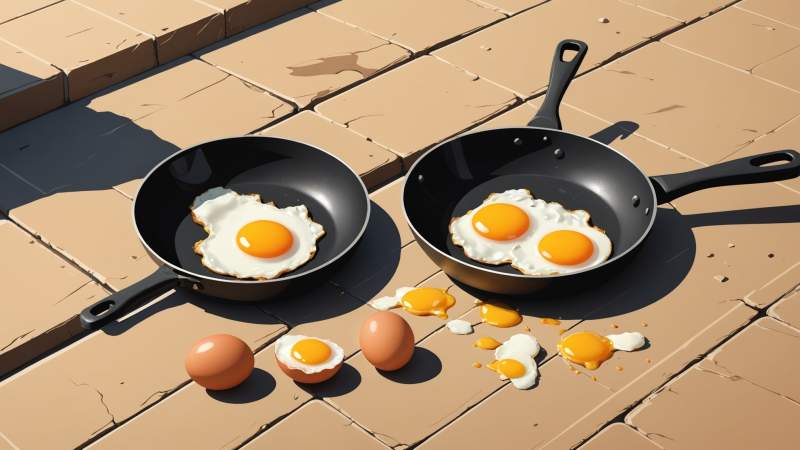
Sidewalk Egg Frying Day is celebrated annually on 4 July, focusing on the concept of using solar heat for cooking. The event’s title originates from the common expression that it is so hot outside one could fry an egg on the pavement.
The tradition includes a notable competition in Oatman, Arizona, where participants employ solar energy techniques such as mirrors and magnifying glasses to cook eggs quickly. This event also serves as a tourist attraction during Independence Day celebrations.
Historical accounts of frying eggs on hot surfaces date back over a century, with documented mentions in newspapers from the late 19th and early 20th centuries. Despite high temperatures, scientific studies show that materials like concrete and brick are not ideal for cooking, prompting the use of alternative methods.
Date and Symbolism of the Holiday
Sidewalk Egg Frying Day is observed annually on the 4th of July. The name of the holiday originates from the common expression describing extreme heat: “so hot you can fry an egg on the sidewalk.” This phrase captures the essence of the event, which aims to raise awareness about the benefits of solar energy. By linking the celebration to a vivid and relatable image of heat, the holiday symbolically highlights the potential of harnessing the sun’s power for practical uses.
Celebrations and Traditions in the USA
In Oatman, Arizona, an annual solar egg frying contest is held every 4 July as part of the United States Independence Day celebrations. This event, founded in 1983 by Fred Eck, has become a notable local tourist attraction, drawing visitors interested in the unique tradition of cooking eggs using solar energy. Participants in the contest compete to fry an egg in under 15 minutes, employing a variety of materials to harness the sun’s power. These include mirrors and magnifying glasses, which help concentrate sunlight effectively. Winners often utilise polished metal surfaces and solar concentrators rather than relying solely on the hot asphalt, enabling them to cook eggs more quickly. This competition highlights both the creativity and resourcefulness involved in solar cooking practices within the context of American festivities.
History and Early Mentions
The practice of frying eggs on sidewalks has intrigued people for approximately a century. One of the earliest recorded mentions appears in the 1899 edition of the Atlanta Constitution. In a column titled “How to Cool Off,” Dr Francis Henry Wade observed that the bricks of sidewalks could become sufficiently hot to cook eggs. This idea captured public interest and was revisited in later years. For instance, an article in the Los Angeles Times from October 1933 reported on record-breaking temperatures in Los Angeles, discussing the possibility of cooking eggs using solar heat. That same year, a photograph of actor Pat Rooney Jr attempting to fry an egg on Times Square highlighted the popularity and cultural fascination with this unusual method of cooking. These early references illustrate the longstanding curiosity and experimentation with using natural heat sources for cooking eggs on urban surfaces.
Scientific and Practical Aspects of Frying Eggs in the Sun
From a scientific perspective, materials such as concrete and bricks are poor conductors of heat for the purpose of frying eggs. Despite the high ambient temperatures recorded during solar cooking attempts—often reaching approximately 120 to 140 °F (around 49 to 60 °C)—simple surfaces like stones and asphalt frequently fail to provide the consistent and efficient heat distribution necessary for cooking eggs effectively. Video recordings and reports from 2013, including examples from Death Valley, demonstrate that these natural surfaces alone do not achieve the required thermal conditions. Consequently, frying pans or metal panels are commonly employed to enhance heat conduction and achieve the desired culinary effect when frying eggs using solar heat.
Modern Experiments and Influence in Australia
In January 2013, the Australian Bureau of Meteorology introduced new colours to its temperature maps to represent extreme heat conditions exceeding 50 °C. These additions, specifically purple and pink hues, were designed to visually communicate the severity of such temperatures. This change significantly heightened public awareness and interest in the phenomenon of cooking eggs on the sidewalk using solar heat. The vivid representation of extreme heat on official weather maps sparked curiosity and encouraged experimental activities related to solar cooking across the country. By 2015, this interest had evolved into a notable trend among Australian YouTubers, who began filming themselves frying eggs on pavements during heatwaves reaching 111 degrees Fahrenheit. These modern experiments and the resulting social media exposure have contributed to the cultural recognition of solar egg frying as both a practical demonstration of extreme heat and a unique form of public engagement with Australia’s climate conditions.
Experiments and Consequences in Death Valley National Park
In 2013, an anonymous video emerged from Death Valley National Park, showcasing attempts to fry eggs on rocks heated to approximately 120 degrees Fahrenheit. This demonstration highlighted the extreme temperatures achievable in the park’s natural environment. However, the video’s publication led to unintended consequences. Following the surge in similar egg-frying experiments by visitors, park authorities were compelled to issue warnings to discourage such activities. Additionally, the increase in these experiments resulted in noticeable littering and environmental degradation, prompting cleanup efforts to preserve the park’s natural state. These events underscore the challenges of balancing public engagement with environmental protection in sensitive natural areas.
Culinary Methods and the History of Egg Preparation
In the 1950s, the renowned French culinary master Fernand Point developed a method for preparing the perfect fried egg at his restaurant La Pyramide. This approach to cooking eggs reflects a significant moment in culinary history, highlighting the precision and technique involved in achieving an ideal fried egg. Point’s method, established in a professional kitchen setting, underscores the artistry and skill that can be applied to what might otherwise be considered a simple dish. His contribution remains a notable reference point in the broader context of egg preparation methods.