
Nobel Day and the Legacy of Alfred Nobel
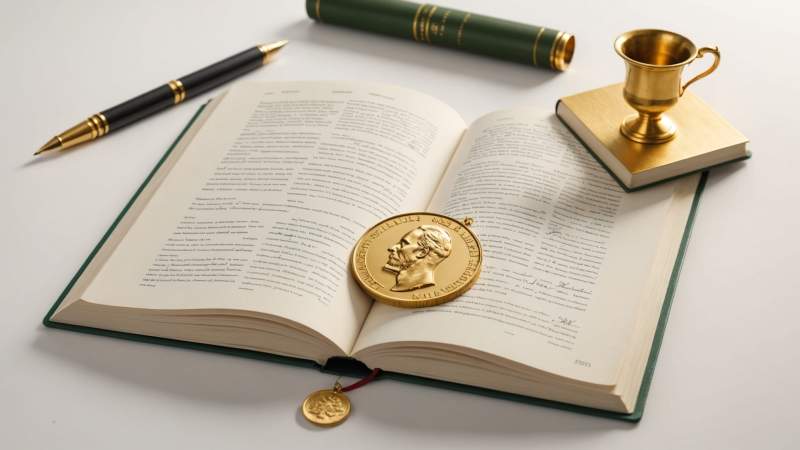
Nobel Day is celebrated every year on 10 December in Stockholm, marking the anniversary of Alfred Nobel’s death in 1896. Nobel was a Swedish chemist, engineer, and prolific inventor, best known for creating dynamite and holding more than 350 patents.
Alfred Nobel’s will established the Nobel Prize, which recognises exceptional achievements in fields such as physics, chemistry, medicine, literature, and peace. The first Nobel Prizes were awarded in 1901, and the tradition continues to honour individuals who have made significant contributions to society.
The Nobel Day ceremony includes the presentation of medals, diplomas, and monetary awards to laureates, followed by a formal banquet attended by the Swedish royal family, diplomats, scientists, and politicians. This event underscores the global importance of scientific discovery, cultural advancement, and peace efforts.
Date and Celebration of Nobel Day
Nobel Day is observed annually on 10 December, marking the date of the death of Alfred Nobel, the Swedish chemist, engineer, and inventor, who passed away on 10 December 1896. This day holds significant importance in Sweden, where it is celebrated as a national holiday. Each year in Stockholm, the Nobel Prize awards ceremony takes place on this date, drawing global attention. The event is broadcast on television, reaching millions of viewers worldwide. Nobel Day serves as a reminder of the enduring values associated with Alfred Nobel’s legacy, emphasising the pursuit of knowledge, humanitarianism, and peace. Over time, the celebration has gained popularity beyond Sweden, becoming recognised and honoured in many countries around the world.
Australia’s Contribution to the Nobel Prizes
Australia has made significant contributions to the Nobel Prizes across multiple disciplines, reflecting the country’s impact on global scientific and cultural advancements. In 1945, Australian pathologist Howard Florey was awarded the Nobel Prize in Physiology or Medicine alongside Alexander Fleming and Ernst Boris Chain for the discovery of penicillin and its curative effects on various infectious diseases. This groundbreaking work revolutionised medicine and saved countless lives.
Furthering Australia’s legacy in medicine, the 1960 Nobel Prize in Physiology or Medicine was jointly awarded to Australian physiologist Frank Macfarlane Burnet and Peter Medawar for their discovery of acquired immunological tolerance, a fundamental concept in immunology. In 1996, Australian neurophysiologist Peter Doherty shared the Nobel Prize in Physiology or Medicine with Rolf Zinkernagel for their discoveries concerning the specificity of the cellular immune response.
In 2005, Australian scientists Barry Marshall and Robin Warren received the Nobel Prize in Physiology or Medicine for identifying the role of the bacterium Helicobacter pylori in the development of gastritis and peptic ulcers, a finding that transformed the understanding and treatment of these conditions.
Australia’s influence extends beyond medicine. In 1973, Australian physicist John Warcup Hall was awarded the Nobel Prize in Physics together with Leo Esherick and Ivar Giaever for experimental discoveries related to tunnelling phenomena in semiconductors and superconductors. The same year, Australian writer Patrick White received the Nobel Prize in Literature for his epic and psychologically profound narrative prose.
In the realm of peace and human rights, the 2011 Nobel Peace Prize was awarded to Australian human rights advocate and lawyer Julia Gillard, alongside Ellen Johnson Sirleaf and Leymah Gbowee, recognising their efforts to promote women’s safety and their full participation in peace processes. Collectively, these laureates highlight Australia’s diverse and enduring contributions to the Nobel legacy.
The Life and Legacy of Alfred Nobel
Alfred Nobel was a prolific inventor, credited with over 350 inventions throughout his lifetime. Among these, his most renowned invention was dynamite, which significantly impacted various industries. Beyond his contributions to science and technology, Nobel’s legacy is profoundly marked by his philanthropic vision. In his will, he bequeathed the majority of his fortune to establish awards recognising outstanding achievements in science and other fields. This bequest led to the creation of the Nobel Foundation, an organisation dedicated to managing the funds and overseeing the awards established in his name.
History and Significance of the Nobel Prize
The Nobel Prize was first awarded in 1901, marking the beginning of a prestigious tradition recognising outstanding contributions in various fields of science and culture. The prize is granted to scientists and public figures whose work has had a profound impact within their respective disciplines. Eligibility for the Nobel Prize includes revolutionary inventions, exceptional scientific research, or significant contributions to societal development. Receiving the Nobel Prize serves as an acknowledgment of an individual’s importance in global culture and confers international recognition. Notably, the Nobel Peace Prize has been awarded to prominent figures such as Martin Luther King Jr. and Nelson Mandela, as well as organisations like the Red Cross, highlighting its role in honouring efforts towards peace and humanitarianism.
Ceremony and Awarding of Laureates
Laureates travel to Stockholm to receive their Nobel Prize, which includes a gold medal and a monetary award. Each recipient is presented with a medal, a diploma, and a financial prize as part of the official recognition. In accordance with Alfred Nobel’s will, the Peace Prize is awarded separately in Oslo. The award ceremony culminates in a formal banquet attended by the Swedish royal family, diplomats, scientists, and politicians from around the world. Following the ceremonial proceedings, laureates are invited to attend the Nobel Concert, marking the conclusion of the day’s official events.
The Significance and Impact of the Nobel Prize
Nobel Day holds particular importance for individuals whose professional work is connected to fields such as science, literature, physics, chemistry, medicine, and physiology. On this day, the awards serve to recognise and support those who dedicate their lives to the betterment of society. The Nobel Prize has honoured a diverse range of laureates, from the youngest recipient, Malala Yousafzai, who was awarded the Peace Prize in 2015 at the age of 17, to the oldest laureate, Leonid Hurwicz, who received the Nobel Prize in Economics in 2007 at the age of 90. These distinctions highlight the broad impact and enduring influence of the Nobel Prize in acknowledging exceptional contributions across generations.