
Mars Exploration Day and the Mariner 4 Mission
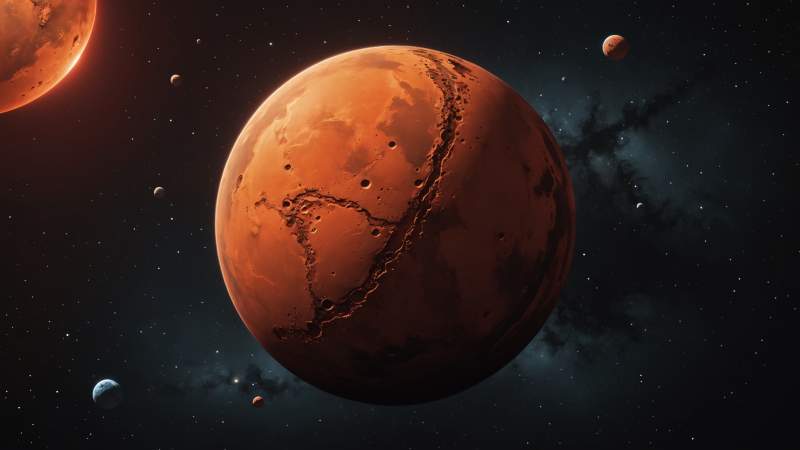
Mars Exploration Day is an annual event held on 28 November to commemorate the launch of the Mariner 4 spacecraft. This mission marked a significant milestone in planetary exploration by successfully flying past Mars and capturing detailed images of its surface.
Mars, often called the Red Planet due to its iron oxide-rich surface, is the fourth planet from the Sun and the second smallest in the Solar System. Named after the Roman god of war, Mars has two moons, Phobos and Deimos, named after the god’s sons.
The Mariner programme, developed by NASA’s Jet Propulsion Laboratory, aimed to explore the inner planets using robotic spacecraft. Mariner 4’s achievements provided invaluable data and experience for future interplanetary missions, inspiring ongoing interest in Mars exploration.
Date and Commemorative Day
Mars Exploration Day is observed annually on 28 November. This commemorative day was established to mark the launch of the Mariner 4 probe. Despite its significance, the exact origins of Mars Exploration Day remain unclear.
Celebrating Mars Exploration Day in Australia
In Australia, Mars Exploration Day on 28 November is marked by a variety of educational and observational activities that engage the public with the Red Planet. The Sydney Observatory hosts Mars viewing sessions accompanied by public lectures focused on the Mariner 4 mission, providing attendees with insights into this historic exploration. Meanwhile, the Australian National University in Canberra organises webinars that delve into Martian research, incorporating data gathered from local radio telescopes to enrich the discussions.
In Melbourne, planetariums present shows dedicated to Mars, highlighting its distinctive iron oxides and drawing parallels between the planet’s surface and Earth’s deserts. These presentations aim to deepen public understanding of Mars’ unique characteristics. Additionally, schoolchildren across the country participate in creative competitions, including Mars-themed drawing contests and rover modelling activities, inspired by the 1964 launch of the Mariner probe.
Astronomical societies in Perth contribute to the celebrations by arranging nighttime telescope sessions that allow enthusiasts to observe Mars’ moons, Phobos and Deimos. These diverse events collectively foster a nationwide appreciation of Mars and its exploration, making Mars Exploration Day a significant occasion in Australia’s scientific and educational calendar.
General Information about Mars
Mars is the fourth planet from the Sun and holds the distinction of being the second smallest planet in the Solar System, surpassed only by Mercury in size. The planet is named after the Roman god of war, a fitting title given its striking appearance. Mars is often referred to as the Red Planet due to the distinctive reddish hue of its surface. This coloration results from the abundance of iron oxide, commonly known as rust, which covers much of the planet’s terrain. In addition to its surface characteristics, Mars is notable for its two moons, Phobos and Deimos, which are named after the sons of the Roman god of war. From Earth, Mars is one of the brightest objects visible in the night sky, making it a prominent feature for both astronomers and casual observers alike.
The Beginning of Mars Exploration and the Mariner Program
The exploration of Mars by spacecraft began in the 1960s, marking a significant milestone in planetary science. Following this initial phase, NASA launched the Mariner program, which was designed to investigate the planets of the inner Solar System. This ambitious program focused on Mars, Mercury, and Venus, employing robotic interplanetary probes to gather valuable data. The Mariner spacecraft were developed by NASA’s Jet Propulsion Laboratory, which specialised in creating advanced robotic explorers. Through these efforts, the Mariner program laid the groundwork for detailed scientific study of these neighbouring planets, advancing humanity’s understanding of our celestial environment.
Launches and Missions of the Mariner Probes
The Mariner programme included a series of spacecraft designed for planetary exploration, with initial missions targeting Venus and subsequent ones aimed at Mars. Mariner 1 and Mariner 2 were developed and launched to study Venus. Unfortunately, Mariner 1 failed shortly after launch and was destroyed approximately five minutes into its flight. In contrast, Mariner 2 successfully reached Venus, becoming the first spacecraft to fly past another planet.
Following these Venus missions, the focus shifted to Mars with the development of Mariner 3 and Mariner 4. Both probes were intended for Mars exploration. Mariner 3 was successfully launched but failed to reach Mars due to a malfunction. Mariner 4, however, was launched from Cape Canaveral on 28 November 1964, marking a significant step in Mars exploration efforts.
The Mariner 4 Mission and Achievements
The Mariner 4 spacecraft successfully conducted a flyby of Mars, marking a significant milestone in space exploration. After a journey lasting seven and a half months, Mariner 4 passed by the Red Planet on 14 and 15 July 1965. During this historic encounter, it captured 22 close-up images of Mars’ surface, the first ever taken of another planet at such proximity. To ensure data integrity, each photograph was transmitted twice back to Earth, with the full sequence of images received by 3 August 1965.
Originally expected to remain operational for eight months, the Mariner 4 mission extended to approximately three years. Throughout this period, the spacecraft conducted various measurements in interplanetary space near Mars, providing valuable scientific data. Communication with Mariner 4 was maintained until 21 December 1967, when contact was finally lost.
Beyond its immediate scientific returns, Mariner 4 offered the Jet Propulsion Laboratory’s engineers invaluable experience that informed subsequent missions. Its pioneering achievement of delivering the first close-up images of another planet remains a landmark in the history of planetary exploration.
Significance and Popularity of Mars Exploration Day
Mars Exploration Day holds a special place among astronomy enthusiasts worldwide. It is widely celebrated by individuals who have a keen interest in the study of space, whether they engage with it professionally or as a personal passion. The day serves as a unifying occasion for those fascinated by the exploration of Mars, highlighting the collective enthusiasm and dedication within the community. This widespread recognition underscores the importance of Mars Exploration Day as a symbol of curiosity and commitment to advancing our understanding of the Red Planet.