World Lizard Day: Reptile Diversity and Conservation Awareness
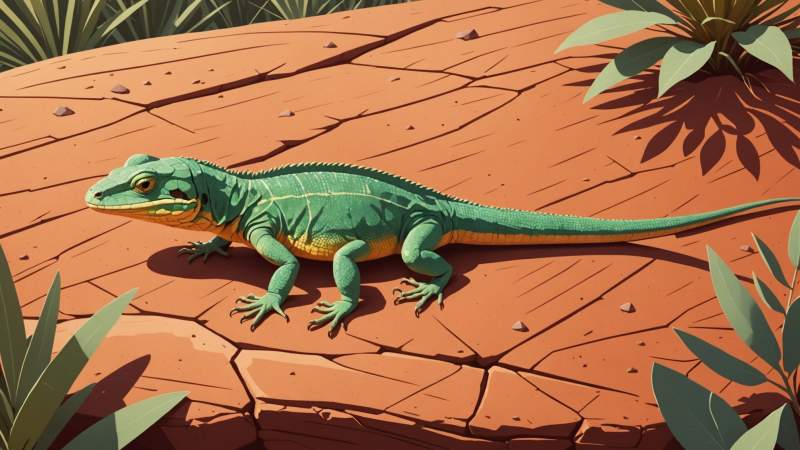
World Lizard Day is an annual event held on 14 August to highlight the extraordinary diversity and ecological significance of lizards across the globe. The day was founded in 2004 by American biologist John Hunter, who sought to draw public attention to the growing threats facing reptiles and their irreplaceable roles in natural ecosystems.
Lizards belong to the order Squamata and encompass over 7,000 described species found on every continent except Antarctica. They range from tiny geckos weighing less than a gram to Komodo dragons exceeding 80 kilograms. Some species can change colour, scale vertical surfaces, detect ultraviolet light, and voluntarily shed their tails to escape predators — adaptations that have evolved over roughly 250 million years.
In Australia, home to more than 700 lizard species, World Lizard Day is marked by educational events at venues such as Healesville Sanctuary. These activities inform the public about lizard biology, conservation status, and the urgent need to protect their natural habitats from ongoing degradation.
Date of the Celebration
World Lizard Day is observed every year on 14 August. This fixed date allows conservation organisations, zoos, schools, and wildlife sanctuaries around the world to coordinate awareness campaigns, public talks, and hands-on educational activities simultaneously — amplifying the reach and impact of the message.
Lizards in Australia
Australia harbours one of the richest lizard faunas on Earth, with over 700 species across highly varied habitats, from tropical rainforests to arid desert plains. Two species stand out as particularly iconic:
- Goanna (Australian monitor lizard) — the largest lizard on the continent, capable of reaching up to two metres in length. Goannas are active hunters and scavengers and hold deep cultural significance in Aboriginal mythology, where they appear as ancestral figures and totemic symbols.
- Bearded dragon — a medium-sized agamid lizard widely distributed across arid and semi-arid regions. Its distinctive “beard” display is a well-studied example of lizard communication behaviour.
Legal protection for Australian monitor lizards is provided under the Environment Protection and Biodiversity Conservation Act 1999, one of Australia’s most significant pieces of environmental legislation. Institutions such as Healesville Sanctuary mark World Lizard Day each year with guided tours, keeper talks, and interactive exhibits designed to connect visitors with these often-misunderstood reptiles.
History and Purpose of the Celebration
World Lizard Day was established in 2004 by American biologist John Hunter. His motivation was straightforward but urgent: lizards, despite being among the most species-rich vertebrate groups on the planet, receive far less public attention and conservation funding than mammals or birds. Hunter aimed to change that by creating a dedicated annual moment for education and advocacy.
As herpetologists and conservationists have long observed, lizards are often the silent workhorses of ecosystems — regulating insect populations, dispersing seeds, and serving as prey for larger predators — yet they remain dramatically underfunded in global conservation efforts compared to their ecological importance.
To mark the occasion, organisations across multiple countries host a range of activities, including:
- Public lectures and school presentations on lizard biology and ecology
- Guided tours at zoos, sanctuaries, and nature reserves
- Interactive games and quizzes for younger audiences
- Video screenings and documentary showings
- Citizen science initiatives encouraging people to record local lizard sightings
Biological Characteristics of Lizards
Lizards are members of the reptilian order Squamata — the largest order of reptiles, which also includes snakes. Their biological diversity is remarkable:
| Feature | Range or Detail |
|---|---|
| Number of species | Over 7,000 worldwide |
| Smallest species | A few centimetres long; weight approx. 1 gram |
| Largest species (Komodo dragon) | Up to 3 metres; up to approx. 80 kg |
| Lifespan | 1 year (some small species) to 30 years (large monitors) |
| Vision | Predominantly orange-shifted hue perception; UV light detection |
| Tail regeneration | Partial to full regrowth after autotomy |
| Primary sense of touch | Mediated largely through the tongue |
One of the most studied lizard adaptations is autotomy — the voluntary shedding of the tail when threatened by a predator. The detached tail continues to wriggle, distracting the predator while the lizard escapes. Depending on the species, the tail can regenerate partially or fully, though the regrown version is typically composed of cartilage rather than vertebrae.
Lizard vision is equally fascinating. Their retinal cells are structured in a way that shifts colour perception toward the orange spectrum, and many species can detect ultraviolet light — wavelengths invisible to humans. This UV sensitivity likely plays a role in mate selection and territory signalling. Most lizards are also proficient swimmers, capable of diving and navigating aquatic environments when needed.
Diet and Behaviour
Lizard diets vary considerably by species and body size, but the majority are carnivorous:
- Small and medium species — feed primarily on insects, arachnids, molluscs, worms, and snails
- Large species (e.g., tegus, monitor lizards) — consume frogs, snakes, other lizards, small birds, rodents, and the eggs of birds and reptiles
- Herbivorous species — some iguanas and agamids feed exclusively or predominantly on plant matter
- Omnivorous species — incorporate both animal and plant material into their diet
A consistent behavioural trait across virtually all lizard species is that they do not chew their food — they swallow prey whole. This is an important distinction from mammals and reflects their fundamentally different digestive and jaw anatomy.
Evolution and Distribution
The evolutionary history of lizards stretches back approximately 250 million years, making them one of the oldest surviving vertebrate lineages. Key milestones include:
- Late Jurassic period — major groups such as geckos, iguanas, and monitor lizards were already established and diversified.
- Tertiary period — a dramatic expansion in species diversity and geographic distribution, driven by the warm global climates of the era.
- Late Cretaceous period — the rise of mosasaurs, giant marine reptiles that evolved from monitor lizard ancestors. These animals, some exceeding 14 metres in length, were apex predators of Cretaceous seas before their extinction approximately 66 million years ago.
Today, lizards inhabit every continent except Antarctica and are found across most oceanic archipelagos. Despite extensive scientific study, a significant number of modern species remain poorly understood due to their rarity or residence in remote, inaccessible habitats — meaning new species are still regularly described by researchers.
Cultural Significance and Conservation
Lizards occupy a prominent place in the mythology and folklore of cultures across Australia, Polynesia, South America, Africa, and Asia. Across these traditions, they have commonly symbolised:
- Wisdom — associated with foresight and ancient knowledge in many Indigenous traditions
- Wealth and good fortune — in parts of South and Southeast Asia, gecko calls are considered lucky omens
- Resurrection and renewal — their ability to shed and regrow tails, combined with periodic moulting of skin, has made them powerful metaphors for transformation and rebirth
Ecologically, lizards are keystone contributors to the health of their environments. They regulate populations of insects and other invertebrates, serve as prey for birds, snakes, and mammals, and contribute to seed dispersal. The loss of lizard populations can trigger measurable cascading effects throughout an ecosystem.
Despite this importance, numerous lizard species face serious extinction risk due to habitat destruction, invasive predators, climate change, and illegal collection for the pet trade. Many are listed under national and international protection frameworks. While most lizards are entirely harmless to humans, they are popular in captivity — species such as chameleons, leopard geckos, anoles, iguanas, and bearded dragons are among the most commonly kept reptile pets worldwide. Responsible ownership and captive breeding programmes, when well managed, can reduce pressure on wild populations.
World Lizard Day serves as a vital annual reminder that protecting lizards means protecting the intricate ecological networks they support — and the cultural heritage they carry in the stories of peoples around the world.