
History and Significance of Sewing Machine Day
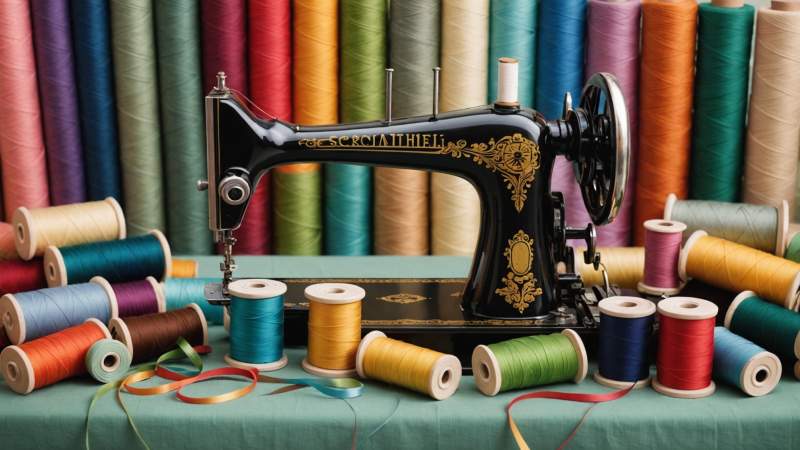
Sewing Machine Day is celebrated on 13 June, marking the historical milestones of an invention that greatly influenced both industry and everyday life. The sewing machine’s origins trace back to early ideas in the 15th century, including designs by Leonardo da Vinci and earlier Dutch innovations for sailmaking.
Throughout the 18th and 19th centuries, inventors refined the sewing machine, with key patents granted to Thomas Saint in 1790 and later improvements by Elias Howe and Isaac Merritt Singer. Singer’s enhancements made machines more reliable, user-friendly, and affordable, leading to their widespread adoption.
The establishment of Singer’s manufacturing in Australia during the 1850s and the construction of a factory in Sydney in the 1880s highlight the sewing machine’s industrial significance. This invention played a crucial role in the Industrial Revolution by increasing production efficiency and shaping the modern textile industry.
Date and Historical Significance of the Holiday
Sewing Machine Day is unofficially observed on 13 June, a date chosen to commemorate a significant milestone in the history of sewing technology. This day marks the anniversary of 13 June 1790, when Thomas Saint was granted a patent for the first sewing machine designed specifically for stitching leather and canvas. This invention laid the foundation for the establishment of the holiday, recognising the importance of the sewing machine in both industrial and domestic contexts. The date serves as a reminder of the origins of a device that would go on to influence various aspects of daily life and manufacturing.
Development of the Sewing Machine in Australia
The development of the sewing machine in Australia began notably in 1856 when Isaac Merritt Singer established sewing machine production in the country. This marked a significant step in the localisation of manufacturing for these devices. Later, in the 1880s, the Singer company expanded its presence by constructing a dedicated factory in Sydney. This factory played a key role in the production and distribution of sewing machines within Australia, contributing to the accessibility and growth of sewing technology in the region.
History of the Invention and Technical Progress
The history of the sewing machine is marked by a series of significant inventions and technical advancements spanning several centuries. Early concepts resembling sewing machines appeared as far back as the 15th century, with Leonardo da Vinci developing prototypes, and even earlier in the Netherlands, where devices were designed for sewing sails. The first patented sewing machine design was created by Karl Weisenthal in 1755, which mimicked the principle of hand sewing.
In the early 19th century, Austrian inventor Josef Madersperger made notable progress by constructing a machine featuring a needle with an eye at its sharp end, capable of producing up to 100 stitches per minute. This innovation was further advanced in 1830 by Frenchman Barthelemy Thimonnier, who patented a sewing machine that could make up to 200 stitches per minute. However, Thimonnier’s workshop was destroyed by protesting workers, hindering the immediate spread of his invention.
A major breakthrough came in 1845 when American Elias Howe invented a sewing machine employing a shuttle stitch, capable of 300 stitches per minute. Howe’s design featured a horizontal needle movement and vertical placement of materials. Building on Howe’s work, Isaac Merritt Singer founded a company in 1851 and developed a modernised version of the sewing machine. Singer’s machines were reliable, user-friendly, repairable, and relatively affordable, becoming symbols of prosperity and a household aspiration.
Impact on Industry and Society
The invention of the sewing machine marked a pivotal technical breakthrough during the Industrial Revolution, significantly boosting productivity not only in factories but also in home workshops. Early industrial sewing machines were widely employed in the production of clothing, footwear, and equipment, which led to a reduction in the cost of manufactured goods and an increase in the availability of clothing for everyday use. In the nineteenth century, Singer machines became a symbol of domestic industrialisation, as they were sold on instalment plans, making them accessible to a broad segment of the population and home sewers alike. The development of the sewing machine also stimulated the emergence of a new profession—the machine seamstress—and contributed to the growth of sewing factories and the establishment of the first sewing cooperatives. Modern computerised sewing machines have evolved from nineteenth-century designs, retaining the shuttle stitch principle while incorporating electronic control and stitch programming.