Pentecost: Christian Festival Commemorating the Holy Spirit’s Descent
Pentecost is a major Christian festival celebrated on the fiftieth day after Easter Sunday. The name derives from the Greek word meaning ‘fiftieth,’ reflecting its timing in the liturgical calendar.
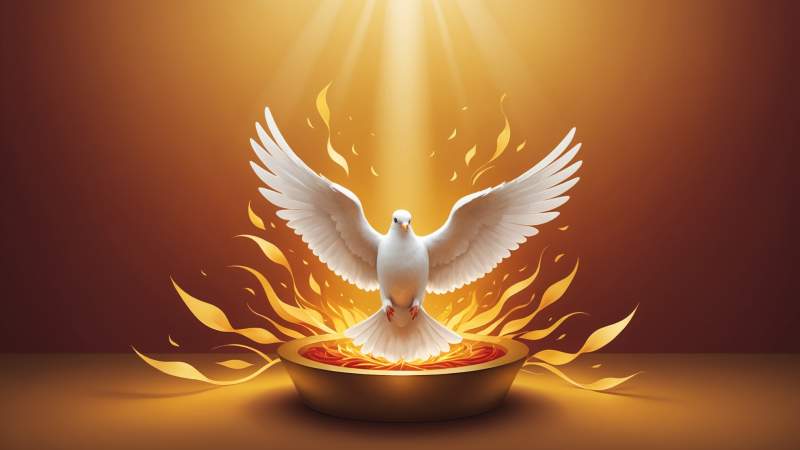
The festival commemorates the descent of the Holy Spirit upon the Apostles, an event that signifies the birth of the Christian church and the start of its mission in the world. Pentecost is also linked to the Jewish festival of Shavuot, originally a harvest celebration.
In many Christian traditions, Pentecost is marked by special church services featuring red vestments and decorations, symbolising the Holy Spirit and the fire of faith. It is often chosen as a day for baptisms and confirmations.
Date and Name of the Festival
Pentecost, also known as Trinity, is a significant festival in the Christian church celebrated on the Sunday that falls fifty days after Easter. The term “Pentecost” originates from the Greek word Pentekoste, meaning “fiftieth.” This name reflects the timing of the festival, which occurs on the fiftieth day following Easter Sunday. Since fifty days correspond to seven weeks, Pentecost has also been referred to as the “week of weeks.”
Pentecost in Australia
In Australia, Pentecost is not recognised as a national public holiday, and no additional federal day off is granted in its observance. Historically, in the 19th century, the state of Victoria acknowledged Pentecost, known locally as Whit Monday, as one of its colonial holidays; however, it later lost its status as an official day off. Despite this, many Anglican, Catholic, and Protestant congregations across Australia hold special services on Pentecost Sunday, emphasising the theme of the “birthday of the Church” and the descent of the Holy Spirit upon the apostles. Within the Anglican Church of Australia, the liturgical colour for Pentecost services is traditionally red, symbolising the fire of the Holy Spirit and the witness of martyrs. Pentecost is also widely regarded among various Christian communities as an appropriate occasion for confirmation and adult baptism. Furthermore, a significant portion of Pentecostal and charismatic churches in Australia, including the Australian Christian Churches and numerous independent congregations, derive their theological identity and name from the evangelical event of Pentecost. The celebration of Pentecost in Australia is not fixed to a civil calendar date but occurs on the Sunday that falls fifty days after Easter, according to the respective church calendar. In the Catholic Church of Australia, Pentecost marks the conclusion of the Easter season, which begins with Easter and extends for fifty days until the celebration of the Holy Spirit’s descent upon the apostles.
Historical and Jewish Roots
Pentecost originally began as a Jewish festival known as the Feast of Weeks or the Harvest Festival. This celebration marked the commencement of the first weeks of wheat harvesting, which typically took place in early May. During this time, fresh loaves of bread made from the newly gathered wheat were brought by the high priest as part of the observance. The festival, also called Shavuot in Jewish tradition, was initially a thanksgiving event expressing gratitude for the first fruits of the wheat harvest. Over time, Shavuot became associated with the remembrance of the Law given by God to Moses on Mount Sinai. According to the Old Testament, the fiftieth day after Passover was designated as the Day of Pentecost, a term that directly relates to the Jewish festival celebrated on the fiftieth day following the offering of the first fruits. Jewish men would gather in large groups in Jerusalem to participate in the Pentecost celebrations, underscoring the festival’s communal and religious significance. Thus, Pentecost began as a Jewish festival deeply rooted in agricultural cycles and religious tradition.
Religious Significance and Traditions
Pentecost holds profound religious significance as it marks the beginning of the Christian church’s mission in the world. It commemorates the moment of Christ’s ascension into heaven and the subsequent descent of the Holy Spirit upon the Apostles and other disciples following Christ’s crucifixion, resurrection, and ascension. In Catholic belief, Pentecost is the day when the Holy Spirit descended upon the Apostles, signifying not only the empowerment of the early church but also the manifestation of Christ and the divine promise that God will always protect His followers. This day is also observed as a time to honour devout Catholics and their faith. Liturgically, Pentecost is distinguished by the use of red vestments and altar decorations in the Catholic tradition, symbolising the fire of the Holy Spirit. Similarly, in the Anglican Church of Australia, the liturgical colour for Pentecost services is traditionally red, representing both the fire of the Holy Spirit and the witness of the martyrs. These religious customs underscore the spiritual importance of Pentecost as a celebration of divine presence and the enduring faith of the Christian community.
Festive Customs and Rituals
Pentecost is traditionally chosen as a significant day for the sacrament of baptism, making it the most common occasion for this rite. In many Christian communities across Australia, Pentecost is regarded as an appropriate time not only for baptism but also for the confirmation of adult believers. Historically, Pentecost was observed as a day of celebration and rest, with schools and shops closing to mark the occasion. These customs highlight the festival’s role as a moment of spiritual renewal and communal observance within the Christian calendar.
Historical Changes and Cultural Influence
Pentecost has experienced notable historical changes and varying cultural recognition across different countries. In 1714, Johann Sebastian Bach composed some of the earliest hymns dedicated to Pentecost, marking a significant contribution to the festival’s musical heritage. Over time, the official status of Pentecost as a public holiday has shifted in several nations. For instance, in 1967, Pentecost was replaced by Whit Monday as the observed holiday. Later, in 1973, Ireland ceased to recognise Pentecost as an official public holiday altogether. Conversely, in 2008, Belgium, France, and Germany reaffirmed the festival’s importance by declaring Pentecost an official public holiday. These developments reflect the evolving cultural and societal attitudes towards Pentecost in various regions.