Orthodox Apostles’ Fast Before Saints Peter and Paul Day
The Apostles’ Fast is a significant period of fasting in the Orthodox Christian tradition, observed in memory of the apostles Peter and Paul. It begins on the Monday following Pentecost and lasts until the day before the feast of Saints Peter and Paul, which is celebrated on 12 July according to the Gregorian calendar.
This fast is one of the multi-day fasts in Orthodoxy, alongside the Nativity, Great, and Dormition fasts. Its duration varies each year, depending on the date of Easter, ranging from eight to forty-two days.
Orthodox communities in Australia, including those under the Russian Orthodox Church Outside Russia, the Greek Orthodox Archdiocese, and the Antiochian Orthodox Metropolis, observe the Apostles’ Fast and celebrate the feast of Saints Peter and Paul with liturgical services and traditional customs.
Date and Duration of the Apostles’ Fast
The Apostles’ Fast in the Orthodox tradition begins on the Monday following the Sunday one week after Pentecost and continues until the Feast of Saints Peter and Paul, which is celebrated on 12 July according to the Gregorian calendar. The start date of the fast varies each year because it depends on the date of Easter, resulting in a duration that can range from 8 to 42 days. The fast always concludes on the eve of the Feast of Saints Peter and Paul, that is, on 11 July. The martyrdom of the apostles occurred on the same day—29 June according to the Julian calendar, which corresponds to 12 July in the Gregorian calendar. This day of their death became a day of commemoration and is regarded within the Orthodox Church as one of the great Twelve Great Feasts.
The Apostles’ Fast in Australia
The Orthodox Church in Australia, encompassing jurisdictions such as the Constantinople Patriarchate and the Russian Orthodox Church Outside Russia (ROCOR), adheres to the same liturgical calendar observed worldwide, including the establishment and observance of the Apostles’ Fast and the feast day of Saints Peter and Paul. ROCOR maintains cathedral and parish churches in major Australian cities like Sydney, Melbourne, Brisbane, and Adelaide, where the Apostles’ Fast is liturgically observed, culminating in festive services commemorating the apostles. The Greek Orthodox Archdiocese of Australia, under the jurisdiction of the Constantinople Patriarchate and centred around the Annunciation Cathedral in Sydney, incorporates the Apostles’ Fast and the feast of Saints Peter and Paul into its annual liturgical cycle. Similarly, the Antiochian Orthodox Metropolis in Australia, with its centre at the Saint George parish in Redfern (Sydney), follows Eastern Orthodox fasting practices, including the Apostles’ Fast preceding the feast.
Orthodox parishes in Australia that follow the Julian calendar, such as ROCOR and some Serbian communities, celebrate the feast of Saints Peter and Paul on 29 June Julian, which corresponds to 12 July in the civil calendar. Conversely, parishes using the Revised Julian or Gregorian calendar observe the feast on 29 June civil date, although the duration of the Apostles’ Fast may vary among these communities. Churches dedicated to Saints Peter and Paul in Australia hold patronal celebrations on the feast day, preceded by the Apostles’ Fast, featuring processions and hierarchical services.
It is important to note that, under Australian civil law, Orthodox fasting periods, including the Apostles’ Fast, are not recognised as public holidays and do not entail any special governmental restrictions on work, trade, or public dining. The observance of the Apostles’ Fast in Australia’s multicultural Orthodox communities reflects the religious and cultural diversity of the country, with faithful from Russian, Greek, Serbian, Arab, Romanian, and other ethnic backgrounds participating in this shared spiritual tradition.
General Information about the Apostles’ Fast
The Apostles’ Fast, also known as the Peter’s Fast, Apostolic Fast, Petrovka, or Peter’s Fasting, is one of the several multi-day fasting periods observed in the Orthodox tradition. Alongside the Apostles’ Fast, other significant multi-day fasts include the Nativity Fast, the Great Fast, and the Dormition Fast. This particular fast is established in honour of the holy apostles Peter and Paul, commemorating their practice of fasting as a spiritual preparation for their evangelical mission. The Apostles’ Fast thus holds a distinct place among the liturgical fasts, reflecting both historical reverence and spiritual discipline within the Orthodox Church.
Dietary Rules During the Apostles’ Fast
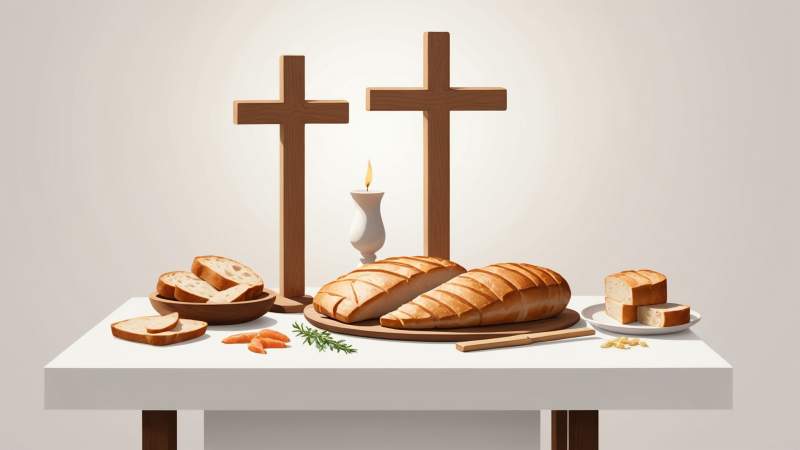
The Apostles’ Fast is observed with specific dietary regulations that vary throughout the week. On Mondays, Wednesdays, and Fridays, adherents practice dry eating once a day, refraining from consuming cooked food or oil. On Tuesdays and Thursdays, the fasting rules permit eating boiled food without the addition of oil twice a day. During weekends, specifically Saturdays and Sundays, the fast allows for two meals daily consisting of boiled food with the inclusion of vegetable oil and fish. These guidelines reflect the traditional practices followed during the Apostles’ Fast, balancing periods of stricter abstinence with more lenient days.
The Lives of the Apostles Peter and Paul
In Orthodox tradition, the Apostles Peter and Paul are revered as the foremost leaders among the apostles, often referred to as the ‘first hierarchs.’ Their lives and ministries hold a central place in Christian history and spirituality. Peter, originally named Simon, was a fisherman before his calling by Jesus Christ. He was among the first disciples called to follow Christ, alongside his brother Andrew, who is known as the First-Called. Peter was one of Jesus’ closest followers, accompanying Him throughout His ministry and being one of the three apostles present at the Transfiguration on Mount Tabor.
Despite his devotion, Peter famously denied Jesus three times on the night of Christ’s arrest, an act for which he later expressed sincere repentance and received forgiveness. His steadfast faith ultimately led to his martyrdom by crucifixion.
Paul, known as Saul before his baptism, was not among the original twelve apostles or the seventy disciples. In church tradition, he is recognised as the Apostle to the Gentiles. Prior to his conversion, Saul was a zealous Pharisee who actively persecuted early Christians. However, on the road to Damascus, he experienced a profound spiritual transformation when he was struck blind and heard the voice of God reproving him. Upon arriving in Damascus, Saul believed in Christ, was healed of his blindness by Ananias, and was baptised, thereafter becoming a fervent servant of the Lord. Paul’s ministry ended with his martyrdom by beheading.
Both apostles suffered for their faith on the same calendar day, though in different years, underscoring their shared dedication and sacrifice for Christianity.