Nativity Fast in Orthodox Christian Tradition
The Nativity Fast is a significant period in the Orthodox Christian liturgical calendar, observed as a time of spiritual and physical preparation for the celebration of Christmas. It is also referred to as the Philip’s Fast or Forty-Day Fast, reflecting its duration and historical origins.
This fasting period begins on 28 November, coinciding with the day commemorating the Apostle Philip, and continues until 6 January, the eve of the Nativity feast. The fast is characterised by specific dietary restrictions and spiritual disciplines aimed at cleansing the body and soul.
In Australia, Orthodox communities observe the Nativity Fast according to either the Julian or Revised Julian calendar, resulting in variations in the fasting period. The fast is accompanied by pastoral guidance emphasising health considerations, especially during the summer season and school holidays.
Start and End Dates of the Fast
The Nativity Fast in the Orthodox Christian tradition begins on 28 November according to the new calendar style. The eve of the fast coincides with the day commemorating the Apostle Philip, which falls on 27 November. This period of fasting continues until 6 January inclusive, directly preceding the celebration of the Nativity of Christ. The fast officially concludes on the night between 6 and 7 January, marked by the appearance of the first star in the sky, symbolising the imminent feast day.
Features of the Nativity Fast in Australia
In Australia, the observance of the Nativity Fast within the Orthodox Christian community reflects the diversity of liturgical calendars and pastoral considerations unique to the local context. Orthodox jurisdictions in Australia, including Russian, Serbian, Greek, and Antiochian churches, follow either the Julian or the Revised Julian calendar depending on their parish traditions. Consequently, the commencement and conclusion of the Nativity Fast vary among communities. For instance, parishes adhering to the Julian calendar, such as those of the Russian Orthodox Church Outside Russia and the Moscow Patriarchate, observe the Fast from 28 November to 6 January according to the Gregorian calendar, culminating in the celebration of Christmas on 7 January. Conversely, the Greek Orthodox Archdiocese of Australia employs the Revised Julian calendar, marking the Fast from 15 November to 24 December, with Christmas celebrated on 25 December.
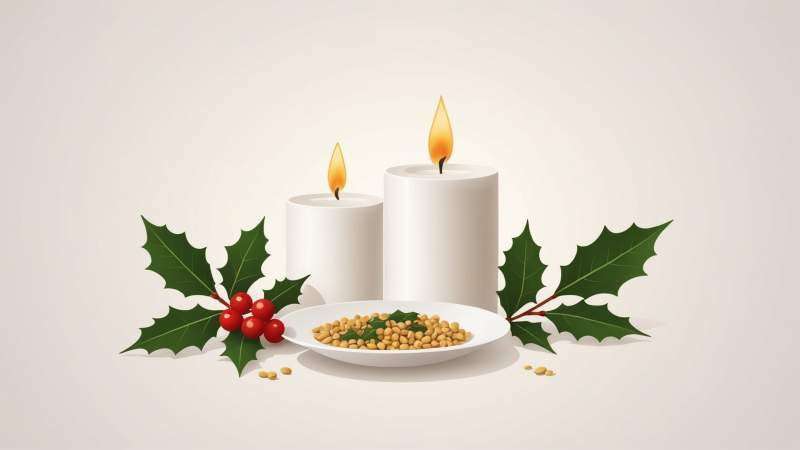
The Australian climate and social rhythms also influence the practice of the Fast. Since the Nativity Fast coincides with the summer heat and school holidays, clergy across Orthodox dioceses in Australia frequently emphasise the importance of balancing fasting with health considerations, particularly for the elderly and those engaged in physical labour. Liturgical life during the Fast in Russian tradition parishes includes additional confessions and the sacrament of Holy Unction, aimed at spiritually preparing the faithful for the Nativity feast. Moreover, a distinctive custom persists in Russian Orthodox communities whereby, on the night of 6 to 7 January, following the conclusion of the Fast, parishioners bring their Lenten Christmas dishes to the church for blessing after the appearance of the first star on Christmas Eve.
History and Origin of the Fast
The Nativity Fast, established in honour of the birth of Christ, traditionally lasts for forty days leading up to the eve of the feast. Historical records mention the Nativity Fast as early as the fourth century, indicating its longstanding presence within Christian practice. This fasting tradition is closely linked to the fast observed on the eve of the Feast of Theophany, which has been celebrated since at least the third century. Over time, the original combined celebration of Theophany evolved into two distinct feasts: the Nativity of Christ and the Baptism of the Lord. Initially, the Nativity Fast lasted only seven days. However, in 1166, Patriarch Luke Chrysoberges decreed an extension of the fast to forty days within the Orthodox Church. Notably, the Armenian Church did not adopt this reform and continues to observe the Nativity Fast for seven days, maintaining the earlier tradition.
Spiritual Significance and Church Teaching
The Church teaches that the Nativity Fast is essential for preparing to celebrate the birth of Christ with a pure heart, soul, and body. This period of fasting involves the purification of the body through abstinence from foods deemed inappropriate for the fast, as well as the cleansing of the soul. Saint John Chrysostom emphasized that true fasting goes beyond dietary restrictions; it requires turning away from evil, controlling one’s speech, setting aside anger, restraining passions, and ceasing slander, lies, and perjury. Thus, the spiritual significance of the Nativity Fast lies in its call to holistic purification, aligning both physical and moral aspects of the believer in readiness for the Nativity feast.
Rules and Traditions of Observing the Fast
The Orthodox Church prescribes specific dietary restrictions during the Nativity Fast, requiring abstinence from meat, eggs, milk, and animal-derived butter. On Mondays, Wednesdays, and Fridays throughout the fast, the consumption of vegetable oil is also prohibited. Fish is permitted only on Saturdays and Sundays, as well as on major feast days, including the Feast of the Entry of the Most Holy Theotokos into the Temple. However, from 2 to 6 January, the fast is intensified, and fish is not allowed even on weekends during this period. Strict adherence to these fasting rules is typically observed by clergy and particularly devout believers, while most laypeople are allowed certain dispensations. It is important for those observing the fast to consider their health condition, seek advice from their healthcare provider, and obtain a blessing from their priest before undertaking the fast.