The Assumption of the Virgin Mary in Catholic Tradition
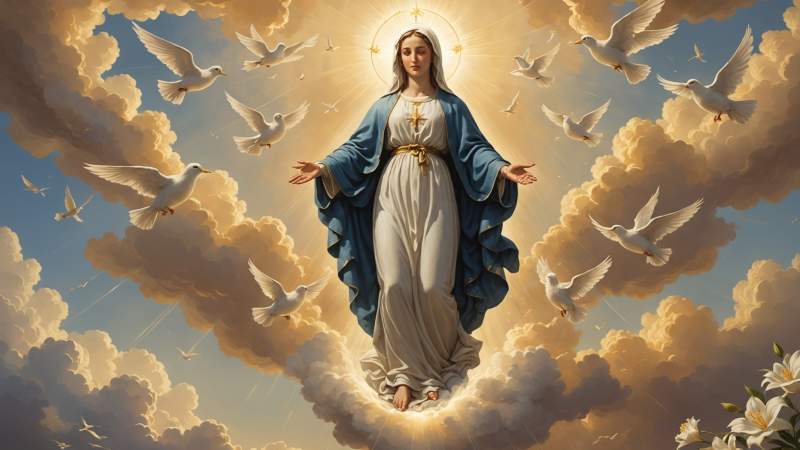
The Assumption of Mary is a significant feast in the Catholic Church, observed annually on 15 August. It commemorates the belief that the Virgin Mary was taken bodily into heaven at the end of her earthly life.
This doctrine, formally defined by Pope Pius XII in 1950, has origins in early Christian apocryphal writings dating back to the 5th and 6th centuries. The feast highlights Mary’s special role in salvation history and her participation in the resurrection and glorification of the human body.
Celebrations include solemn masses and processions, with some countries recognising the day as a public holiday. In Australia, the feast is marked primarily through church services and community events within Catholic parishes.
Date and Celebration on 15 August
The Assumption of the Virgin Mary is celebrated by Catholics on 15 August each year. This date is marked by solemn church processions and liturgical services dedicated to honouring the event. In various countries, 15 August is also observed with other holidays related to the theme of the Assumption. Additionally, in some nations, it is customary to bring the first fruits of the new harvest as offerings to churches and chapels dedicated to Saint Mary, reflecting a tradition of gratitude and reverence associated with the feast.
Celebration in Australia
In Australia, the Assumption of the Virgin Mary is observed primarily within Catholic communities through religious ceremonies held on 15 August. Many parishes conduct special Masses dedicated to the Assumption, often accompanied by large processions that draw significant participation from the faithful. In multicultural Catholic parishes, the liturgy frequently integrates processions and festivals that reflect the diverse cultural backgrounds of the diaspora, enriching the celebration with various traditions. Although 15 August is not a nationwide public holiday in Australia, the observance remains an important ecclesiastical event. In some states and territories, Catholic schools may recognise the day by declaring it a holiday or by shortening the school day to accommodate the religious significance of the feast. Overall, the celebration of the Assumption in Australia is marked by vibrant church-based activities rather than public or secular festivities.
Historical and Apocryphal Sources
Canonical texts do not provide information regarding the time or circumstances of the death and burial of the Virgin Mary. Details about her dormition and assumption into heaven are found exclusively in later apocryphal writings. The earliest accounts concerning the dormition and assumption of the Virgin Mary date back to the fifth and sixth centuries. These sources, emerging several centuries after the events they describe, form the foundation for the tradition surrounding the Assumption, despite the absence of such narratives in the canonical scriptures.
Life and Death of the Virgin Mary
Following the crucifixion, resurrection, and ascension of Jesus Christ, the Virgin Mary was entrusted to the care of the Apostle John. At the time of her death, she resided in Jerusalem. During her prayers, the Archangel Gabriel appeared to Mary and informed her that she would die in three days. He also revealed to her the promise of life and reign in the Heavenly Kingdom alongside her Son, accompanied by archangels, angels, cherubim, seraphim, heavenly spirits, and the souls of the righteous. Upon receiving this message, Mary turned to God in prayer. Miraculously, in response to her prayer, all the apostles—who had dispersed across the world to preach the Gospel—gathered at her home. Mary then bid farewell to everyone, arranged her possessions, and peacefully passed away.
The Burial and Assumption
According to Catholic tradition, the Apostles laid the Virgin Mary to rest in a tomb where her parents and Saint Joseph the Betrothed were also buried. The entrance to this cave-like tomb was sealed with a stone. When the Apostles later opened the tomb for the Apostle Thomas, they found that the body of the Virgin Mary was no longer there. This event is understood within Catholic belief as a miraculous sign of her Assumption. After her death and burial in Gethsemane, the Virgin Mary was assumed body and soul into heaven. Furthermore, Catholic tradition holds that she was crowned in heaven as the Queen of Heaven, affirming her exalted status following her Assumption.
Dogma and Theological Significance
The Feast of the Assumption of the Virgin Mary is founded on the Catholic dogma of the bodily assumption of the Blessed Virgin into heaven after her death. This dogma was solemnly defined in 1950 by Pope Pius XII through the apostolic constitution Munificentissimus Deus, which proclaimed the doctrine of Mary’s bodily taking up into heaven. The celebration of the Assumption has been observed in the Catholic Church since the sixth century, marking not only the event of Mary’s assumption but also the completion of her earthly life. Within the Latin tradition, the feast is closely connected to the belief in Mary’s unique participation in the resurrection and glorification of human flesh, underscoring her special role in salvation history and the destiny of the human body.
Differences in Christian Traditions
The Assumption of the Virgin Mary is understood and commemorated differently within Christian traditions. Notably, the Orthodox Church does not have a dogma concerning the Assumption of the Theotokos. Instead, it celebrates the feast of the Dormition of the Most Holy Theotokos, which focuses on the falling asleep of the Virgin Mary. In contrast, the Catholic Church observes the feast under various titles, including Assumptio Beatae Mariae Virginis, Assunta, and the Taking up of the Most Holy Virgin Mary into heavenly glory. These distinctions highlight the differing theological emphases and liturgical expressions between the Orthodox and Catholic traditions regarding the Virgin Mary’s transition to heaven.