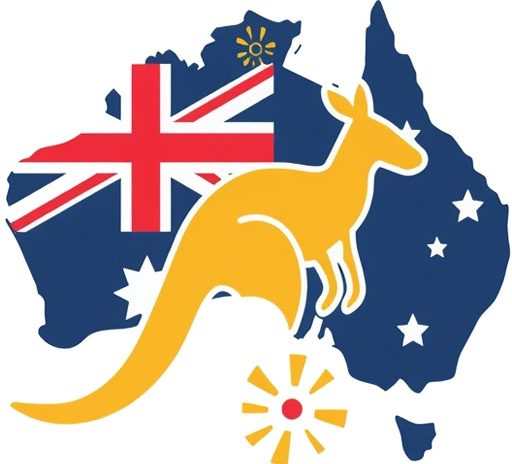
Australian National Flag Day and Its Historical Significance

Australian National Flag Day is an official commemorative day observed annually on 3 September. It honours the history and symbolism of the Australian national flag, which was first raised on this date in 1901 above the Royal Exhibition Building in Melbourne. More than a century later, the day remains a touchstone for understanding how national identity, colonial history, and federation came together in a single piece of cloth.
The flag itself features a blue background with the Union Jack in the upper hoist quarter, symbolising Australia’s British heritage. It also includes the Commonwealth Star and the Southern Cross constellation, representing the federation and the nation. Understanding why these specific elements were chosen — and when they were formally adopted — helps explain why the flag still generates debate and pride in equal measure.
Although not a public holiday, the day is marked by formal flag-raising ceremonies in schools and government organisations, reflecting the flag’s importance in Australian identity and history.
Date and Official Status
Australian National Flag Day is observed annually on 3 September, marked by a formal flag-raising ceremony. This date was officially proclaimed as National Flag Day in 1996 by the Governor-General of Australia, Sir William Deane. While the day holds the status of an official commemorative occasion, it is important to note that it is not designated as a public holiday in Australia — a distinction that often surprises people unfamiliar with how Australia structures its national observances.
Celebration in Australia
The celebration of Australian National Flag Day has evolved through several distinct milestones since its inception. The idea to commemorate the day was first proposed in 1984 by historian and vexillologist John Christian Vaughan. Vaughan played a pivotal role in promoting the observance by organising a public flag-raising ceremony in Sydney’s Hyde Park, marking an early public recognition of the day — twelve years before it received official government status.
The first official flag-raising ceremony took place in 1996 at the amphitheatre in Martin Place, in the heart of Sydney. This event established a formal precedent for the day’s observance and highlighted its growing importance in Australian public life.
Today, Australian National Flag Day is marked by ceremonies across the country, particularly within schools and government organisations. These institutions conduct formal flag-raising events to honour the national flag, fostering a sense of civic awareness and respect for the symbol among Australians of all ages.
As historians of vexillology often note, national flags rarely change quickly — they accumulate meaning slowly, layer by layer, as new symbols are added to older ones rather than replacing them entirely. The Australian flag is a textbook example of this process.
History of the Flag’s Creation
Prior to 1901, Australia did not have a unified national flag; instead, each of the six British colonies possessed its own distinct flag. For collective representation of the Australian colonies before federation, the British Empire’s flag, the Union Jack, was used.
Between 1823 and 1824, John Nicholson and John Bingle designed a national colonial flag. This flag featured a white rectangular field with the British flag in the upper left quarter and a red Cross of Saint George adorned with four stars. Later, in 1831, John Nicholson developed a federative flag for Australia. This design retained elements of the earlier colonial flag but introduced a blue central cross and five stars. The federative flag became a significant emblem of the federation movement during the 1880s and 1890s, symbolising the growing unity among the Australian colonies.
This nearly 80-year gap between the first colonial flag designs and the eventual adoption of a national flag helps explain why so many symbolic elements — the cross, the stars, the Union Jack — were carried forward rather than invented from scratch in 1901.
Establishment of the Modern Flag
The modern Australian national flag was first raised on 3 September 1901, marking a significant moment in the country’s history. This event took place when Prime Minister Edmund Barton announced the winner of the competition to design the Australian flag. The winning flag, measuring 5.5 by 11 metres, was hoisted atop the dome of the Royal Exhibition Building in Melbourne.
Several key dates mark the flag’s path to full legal recognition:
- 1901: The flag is first raised in Melbourne following a national design competition.
- 1934: The specific characteristics of the modern flag are officially published, standardising its design.
- 4 December 1950: Prime Minister Robert Menzies declares the blue flag as the national flag of Australia.
- 14 February 1954: Queen Elizabeth II grants royal assent to the Flags Act 1953, formally confirming the flag’s status.
The legislative definition of the Australian flag is contained within the Flags Act 1953, which remains the legal foundation for the flag’s official status to this day — meaning it took more than half a century from the flag’s first raising to its full legal codification.
Symbolism of the Flag Elements
The Australian flag features a blue rectangular field with a proportion of one to two. Each element on it carries a distinct meaning rooted in the country’s colonial and federal history.
| Element | Position on Flag | Symbolic Meaning |
|---|---|---|
| Union Jack | Upper hoist quarter | Historical ties to Britain and the colonial origins of Australia |
| Commonwealth Star | Lower hoist quarter | Federation of the six original states and territories, represented by seven points |
| Southern Cross | Fly half (right side) | Represents Australia itself, reflecting the constellation visible in the southern sky |
The Commonwealth Star’s seven points are often misunderstood: six points represent the original states, while the seventh represents the territories collectively. This detail is frequently omitted in casual descriptions of the flag but is central to its federal symbolism.
Usage Features and Traditions
In South Australia, the British flag served as the national flag until 1956, reflecting the region’s historical ties and flag usage practices prior to fully adopting the Australian flag.
A significant tradition involving the Australian flag occurs on Remembrance Day, commemorating those who died during the First and Second World Wars. On this solemn occasion, the Australian flag is flown at half-mast from 10:30 to 11:03 in the morning, marking a period of reflection and honour for the fallen. This 33-minute window is deliberately tied to the 11th hour of the 11th day of the 11th month, when the Armistice ending the First World War came into effect.
These practices highlight specific regional and commemorative customs associated with the Australian flag, underscoring its role not only as a national symbol but also as a focal point for remembrance and respect.
Vexillology and the Science of Flags
Vexillology is the scientific study dedicated to flags, banners, and similar emblems. This discipline encompasses the analysis, classification, and understanding of these symbols, which serve as important identifiers for nations, organisations, and various groups.
As a specialised field, vexillology provides insights into the design, usage, and cultural significance of flags. In Australia’s case, it explains why a flag first raised in 1901 continued to evolve legally and symbolically for more than fifty years afterward — and why debates about its design and meaning persist even today among historians and the public alike.