International Flamingo Day: Flamingo Species and Conservation Efforts
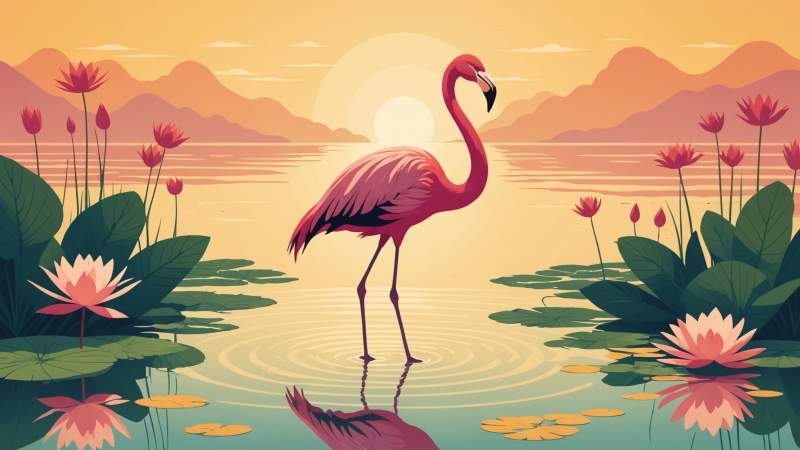
International Flamingo Day is celebrated every year on 26 April to increase public knowledge about flamingos and their conservation. The date commemorates the birthday of John James Audubon, a renowned naturalist and artist who created a life-sized chromolithograph of the red flamingo for his book ‘Birds of America’.
The day was established in 2020 by the Flamingo Specialist Group, a global network dedicated to the study and preservation of six flamingo species. This event is coordinated by the Wildfowl and Wetlands Trust within the framework of the IUCN Species Survival Commission and the International Wetlands Network.
Flamingos belong to the family Phoenicopteridae, which includes three genera and six species distributed across the Americas and Afro-Eurasia. The celebration aims to highlight the unique characteristics of each species and the critical importance of conserving their wetland habitats.
Date and Establishment of the Celebration
International Flamingo Day is observed annually on 26 April. This specific date was chosen to commemorate the birthday of John James Audubon, a renowned artist, naturalist, and ornithologist. The celebration was officially established in 2020 by the Flamingo Specialist Group, marking a dedicated effort to recognise and appreciate flamingos worldwide.
Celebration Features in Australia
In Australia, where flamingos do not inhabit the wild, International Flamingo Day is primarily observed within zoological settings. Notably, the Adelaide Zoo in South Australia was home to the world’s oldest flamingo, which lived to the age of 83 before passing away in 2014. This highlights the significance of captive flamingos in the country’s engagement with the species. Australian ornithologists actively collaborate with the International Union for Conservation of Nature (IUCN) Flamingo Specialist Group, contributing to global conservation efforts aimed at protecting flamingo species. The celebration of International Flamingo Day in Australia also serves to emphasise the importance of the nation’s wetlands for migratory birds closely related to flamingos, underlining the ecological value of these habitats within the broader context of avian conservation.
History and Organisation of the Celebration
International Flamingo Day is coordinated by the Wildfowl and Wetlands Trust within the framework of the IUCN Species Survival Commission and the International Wetlands Network. This collaboration ensures a structured and globally connected approach to the celebration. Central to the event is a global network of flamingo specialists who contribute to the research and conservation of the six flamingo species. Their expertise and coordinated efforts underpin the organisation of the day, highlighting the importance of scientific knowledge and international cooperation in promoting flamingo conservation.
Purpose and Significance of the Celebration
International Flamingo Day serves primarily to raise awareness about the various flamingo species and the importance of their conservation. A key objective of the celebration is to highlight the differences among the six flamingo species, emphasising their unique characteristics. By doing so, the event fosters a deeper understanding and appreciation of these distinctive birds. Additionally, the day underscores the critical need to protect flamingos and their natural habitats, promoting efforts to ensure their survival and the preservation of the ecosystems they depend on.
John James Audubon and His Contribution
John James Audubon made a significant contribution to the depiction of flamingos through his creation of a life-sized chromolithograph of the American flamingo. This artwork was included in his renowned book, “Birds of America,” which features illustrations of nearly 500 American bird species. Audubon’s detailed and accurate representation of the red flamingo in its natural size stands out as a remarkable achievement in ornithological art, highlighting the species within the broader context of American avifauna.
Biological Characteristics of Flamingos
Flamingos belong to the family Phoenicopteridae, which comprises three genera: Phoenicopterus, Phoenicoparrus, and Phoeniconaias. The genus Phoenicopterus includes three extant species, Phoenicoparrus contains two, and Phoeniconaias has one living species. Among the six existing flamingo species, four are native to the Americas, including the Caribbean region, while two species are indigenous to Afro-Eurasia.
The New World flamingos consist of the Chilean flamingo, Andean flamingo, James’s flamingo, and the red flamingo, also known as the Caribbean flamingo. In contrast, the Old World species include the greater flamingo and the lesser flamingo, which are the most well-known. The greater flamingo is the most widespread species, found across North Africa, sub-Saharan Africa, South Asia, the Middle East, and Southern Europe. The lesser flamingo inhabits sub-Saharan Africa and western India; although less widely distributed, it is more numerous than the greater flamingo.
A distinctive biological trait of flamingos is their habit of standing on one leg while tucking the other under their body. Their striking pink or reddish plumage results from a diet rich in carotenoid pigments, primarily obtained from crustaceans. Healthy and well-nourished wild flamingos display vibrant coloration, whereas pale or white flamingos are typically emaciated or unwell. The name ‘flamingo’ itself derives from the Spanish or Portuguese word ‘flamengo,’ meaning ‘flaming’ or ‘fiery,’ reflecting the birds’ vivid appearance.
Conservation Status of Flamingo Species
The International Union for Conservation of Nature (IUCN) classifies several flamingo species according to their risk of extinction. Among these, the lesser flamingo, James’s flamingo, and the Chilean flamingo are designated as threatened species, indicating that they face a high risk of extinction in the wild. In contrast, the Andean flamingo is classified as a vulnerable species, which means it is at a lower but still significant risk of becoming endangered. These classifications highlight the varying degrees of conservation concern across flamingo species and underscore the importance of targeted efforts to protect their populations.