Marshmallow Day in Australia: Origins and Celebrations
Marshmallow Day in Australia is celebrated annually on 18 May, with Melbourne serving as the focal point for public festivities. The day honours a confection that has been part of Western dessert culture for more than two centuries, prized for its soft, airy texture and mild sweetness.
The marshmallow’s origins trace back to a French dessert made from the root of the marshmallow plant, combined with sugar and egg whites. Over time, the recipe evolved to include gelatin, which allowed for mass production and helped the treat spread far beyond its original home.
Today marshmallows are enjoyed in many forms, from being toasted over campfires to enhancing desserts and hot drinks. Marking this day is a way of recognising both the history and the ongoing cultural relevance of a sweet that has outlasted many other confections invented in the same era.
Date and Geography of the Celebration
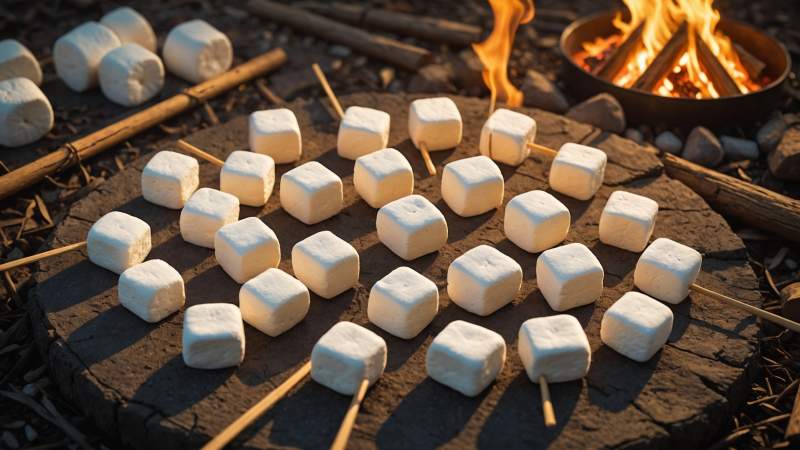
Marshmallow Day in Australia falls on 18 May every year, with the main celebrations concentrated in Melbourne, where enthusiasts gather to mark the occasion. Although the event itself is centred in this one city, the underlying tradition — roasting marshmallows over an open fire — is shared well beyond Australia’s borders. The same practice is deeply embedded in the outdoor and camping cultures of North America, the United Kingdom, and New Zealand.
This overlap is worth noting because it shows that Marshmallow Day is not an isolated novelty; it taps into a genuinely international ritual. As historians of food culture often point out, few confections cross so many English-speaking countries with almost identical preparation methods and social settings — usually a fire, a stick, and a group of people.
Origin and History of Marshmallow
The dessert resembling a modern marshmallow was first created in France in the late eighteenth century. This early confection was made from a mixture of powdered marshmallow root, water, sugar, and egg whites. The sweet was named after the marshmallow plant because the original recipe relied on the sap from its root — the plant is known scientifically as Althaea officinalis. In fact, the English term “marshmallow” translates roughly to “medicinal marshmallow,” a nod to the plant’s long history as a soothing remedy rather than a sweet treat.
Extracting and processing the root sap by hand was slow and labour-intensive, which kept the confection rare and expensive. That changed by the late nineteenth century, when new machinery capable of forming candies from syrups and gels became available. This innovation made it possible to replace the marshmallow root sap with gelatin, a cheaper and more stable ingredient, opening the door to mass production. Once manufacturers could produce marshmallows in large batches, the treat’s popularity spread well beyond France, taking firm hold in the United States in particular.
A second major turning point came in the 1950s, with the invention of the extrusion process. This fully automated marshmallow manufacturing and, as a side effect, gave marshmallows the familiar cylindrical shape most people recognise today. Together, these two innovations — the switch to gelatin and the introduction of extrusion — explain why marshmallows went from a niche apothecary product to a supermarket staple in roughly 150 years.
Composition and Varieties of Marshmallows
Modern marshmallows are made primarily from sugar, water, and gelatin, whipped together until the mixture reaches a thick, foamy consistency. This whipping stage is essential: it incorporates a large amount of air, and a finished marshmallow is roughly fifty percent air by volume. That air content is precisely why marshmallows feel light and spring back when pressed, rather than behaving like a dense sugar candy. Colourings and flavourings are often added at this stage to create variety in taste and appearance.
Beyond the familiar solid, pillow-shaped marshmallow, there is also a spreadable version known as marshmallow cream or marshmallow fluff. The two forms differ in more than just shape:
| Feature | Solid Marshmallow | Marshmallow Cream / Fluff |
|---|---|---|
| Setting agent | Gelatin | Egg whites (or egg-white-based mixtures) |
| Texture | Firm, holds its shape | Soft, spreadable paste |
| Typical use | Roasting, snacking, decoration | Sandwich fillings, dessert toppings |
| Structural firmness | Required (for shape retention) | Not required |
This difference in structure exists because the cream variant does not need to hold a fixed shape, so it does not require gelatin’s firming properties.
Uses and Popular Dishes with Marshmallows
Marshmallows are a genuinely versatile ingredient, used well beyond simple snacking. Common applications include:
- Adding to fruit salads and layered desserts for texture contrast
- Melting into ice cream, cocoa, hot chocolate, and even coffee
- Decorating cakes and pastries
- Serving as a filling in confectionery products
- Roasting directly over an open flame or campfire
Roasting deserves particular mention because of what happens chemically: the exterior caramelises into a golden, slightly crisp crust, while the interior stays soft and gooey. This contrast in textures is arguably the main reason roasted marshmallows remain popular more than a century after mass production began.
One of the most iconic marshmallow-based desserts in the United States is the s’more — two crackers sandwiching a roasted marshmallow and a piece of chocolate. The dessert originated within scouting traditions and has since become an almost indispensable feature of campfire gatherings across North America. Another well-known marshmallow dish is the fluffernutter sandwich, which pairs marshmallow cream with peanut butter. The recipe itself dates back to the First World War, though the catchy name “fluffernutter” was only coined decades later, in the 1960s, by an advertising agency promoting the product commercially.
As food historians often observe, a treat’s staying power usually comes down to simplicity — and few desserts are as simple, or as adaptable, as a marshmallow roasted over an open flame.
These varied uses and dishes show that the marshmallow’s role extends well beyond a simple sweet treat: it is a recurring building block in both traditional recipes and contemporary desserts, which helps explain why a dedicated celebration like Marshmallow Day continues to resonate with so many people, in Melbourne and far beyond it.