World Whale and Dolphin Day and Marine Mammal Conservation
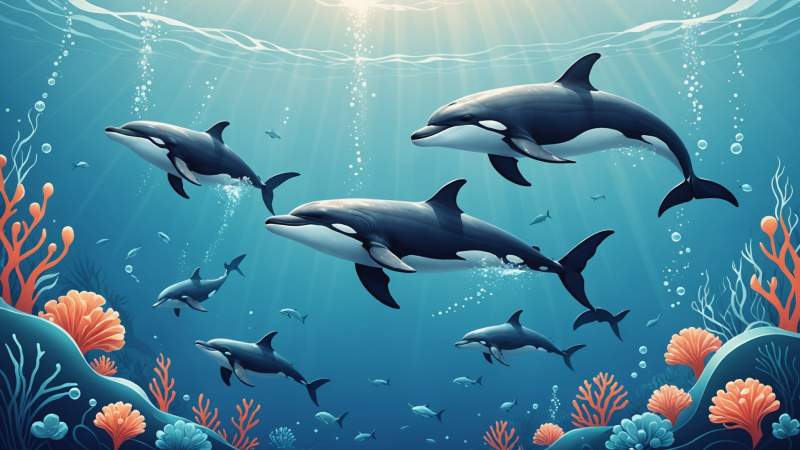
World Whale and Dolphin Day is celebrated annually on 23 July to recognise the global efforts to protect whales and dolphins. The day marks the introduction of a commercial whaling moratorium by the International Whaling Commission in 1986, which aimed to halt the overexploitation of whale populations worldwide.
Whaling has a long history dating back to the 9th to 11th centuries in Europe, initially practised by Norwegians and later by Basque sailors. Over centuries, whaling expanded across the North Atlantic and Arctic regions, involving various nations and evolving with technological advancements such as harpoon guns and steam-powered vessels.
The moratorium on commercial whaling ended centuries of uncontrolled hunting that severely depleted many whale species. Today, World Whale and Dolphin Day serves to raise awareness about the conservation of marine mammals, many of which remain endangered due to past and ongoing human impacts.
Date of the Celebration
World Whale and Dolphin Day is observed annually on 23 July. This date is dedicated to raising awareness about whales and dolphins, highlighting their importance in marine ecosystems and the need for their protection. The choice of 23 July as the day of commemoration provides a focal point for global activities and educational efforts aimed at promoting the conservation of these marine mammals.
Celebration and Protection in Australia
The Australian government has taken a firm stance on marine conservation, enacting the Environment Protection and Biodiversity Conservation Act 1999, which prohibits commercial whaling within Australian waters. Furthermore, Australia consistently opposes commercial whaling at International Whaling Commission meetings and initiated legal proceedings against Japan at the International Court of Justice concerning Japan’s so-called “scientific” whaling in the Southern Ocean. In 2014, the International Court of Justice ruled that Japan’s JARPA II whaling program in Antarctica did not meet scientific research criteria, a decision that supported Australia’s position. Australia also promotes ecotourism centred on whale and dolphin watching as an economic alternative to whaling. The country’s waters are home to populations of humpback whales, southern right whales, and pygmy blue whales, many of which have suffered from historical whaling activities. Protected marine areas such as the Great Barrier Reef Marine Park and the New South Wales Marine Park provide special protection for whales and dolphins, reinforcing Australia’s commitment to marine mammal conservation.
History of Whaling
The history of whaling dates back to the early medieval period in Europe, with the first recorded instances of regular whaling activities attributed to the Norwegians between the 9th and 11th centuries. Following this initial phase, Basque mariners became prominent whalers, conducting their hunts primarily in the Bay of Biscay. During this era, the main targets of whaling were Greenland and right whales. Over time, the practice expanded as Danish and British whalers entered the industry, extending their operations along the European coastline, into Arctic waters, and along the eastern seaboard of North America. Early whaling expeditions relied on small sailing vessels, and whales were hunted using harpoons. Technological advancements gradually improved the design of whaling ships, leading to the introduction of harpoon cannons. By the late 19th century, the advent of steam-powered ships revolutionised whaling, enabling hunters to pursue not only slow-moving but also fast-swimming whale species.
Consequences of Whaling
The consequences of whaling have been devastating for several whale species. Populations of smooth and Greenland whales were nearly completely destroyed due to intensive hunting. As whalers depleted these primary targets, they shifted their efforts to other whale species. However, these new targets also faced severe overexploitation, pushing many to the brink of extinction or leading to their complete eradication. In the early stages of whaling, the lack of international cooperation and regulation meant that whales were hunted without any control, resulting in excessive and unsustainable catches. This unregulated exploitation significantly contributed to the drastic decline in whale populations observed during that period.
International Regulation of Whaling
International cooperation in the regulation of whaling began in 1931, marking the start of efforts to manage and control the industry on a global scale. A significant milestone was reached in 1946 with the adoption of the International Convention for the Regulation of Whaling (ICRW). This convention established the International Whaling Commission (IWC), tasked with developing recommendations and guidelines for member countries regarding whaling practices.
In 1972, the United States enacted the Marine Mammal Protection Act, which prohibited the hunting and import of marine mammals, except for whaling conducted by indigenous peoples for subsistence purposes. That same year, the United Nations Conference on the Human Environment proposed a ten-year moratorium on whaling to address growing environmental concerns.
The International Whaling Commission took decisive action on 23 July 1982 by voting to impose a moratorium on all commercial whaling. This moratorium was scheduled to come into effect during the 1985-86 whaling season. Additionally, several North Atlantic countries, including Norway, the Faroe Islands, Iceland, Greenland, and parts of Canada, established the North Atlantic Marine Mammal Commission to coordinate regional efforts in marine mammal management.
The Significance of World Whale and Dolphin Day
World Whale and Dolphin Day is intrinsically linked to the 1986 introduction of the ban on whaling, enacted by the International Whaling Commission. This prohibition marked the end of over two centuries of relentless whale hunting, a practice that had severely depleted whale populations worldwide. The day serves as a dedicated occasion to promote the protection of whales and all marine mammals, highlighting the urgent need for conservation efforts. Many species of marine mammals remain endangered due to human activities, making the observance of this day crucial in raising awareness and fostering global commitment to their preservation.