
Remembrance Sunday Commemoration in the United Kingdom
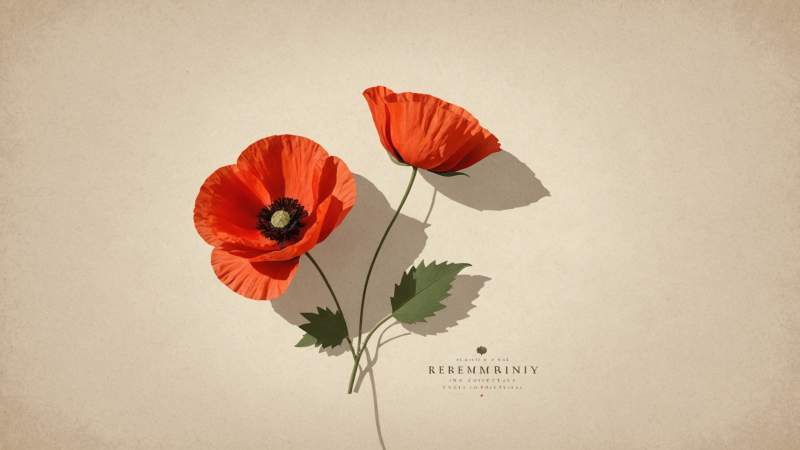
Remembrance Sunday is a significant day in the United Kingdom dedicated to remembering the service and sacrifice of armed forces personnel. It is observed annually on the second Sunday of November.
The observance originated in 1919, shortly after the end of the First World War, with the first national ceremony led by King George V. This event established the tradition of a two-minute silence to honour those who served.
Ceremonies are held nationwide at military memorials, where participants lay wreaths and wear red poppies, a symbol inspired by the poem ‘In Flanders Fields’. The principal ceremony takes place at the Cenotaph in London, attended by members of the royal family.
Date and Symbolism of Remembrance Sunday in the United Kingdom
Remembrance Sunday in the United Kingdom is observed on the second Sunday of November each year. This date is closely aligned with Armistice Day, which commemorates the end of the First World War. A key symbol associated with Remembrance Sunday is the red poppy, which serves as a poignant emblem of remembrance. The use of red poppies as a symbol is connected to the poem “In Flanders Fields,” which highlights the significance of these flowers in remembering those who lost their lives during the conflict. Together, the timing and symbolism of Remembrance Sunday provide a solemn occasion for reflection and honouring the sacrifices made in war.
History and Traditions of Remembrance Sunday in the United Kingdom
Remembrance Sunday in the United Kingdom originated in 1919, following the end of the First World War, to mark the anniversary of the armistice. The first national ceremony was led by King George V, who called for two minutes of silence to be observed in honour of those who had served and sacrificed. Over time, the tradition of Remembrance Sunday expanded to include those who served in the Second World War and subsequent conflicts. Ceremonies are held at military memorials across the UK, where participants lay wreaths and observe moments of silence as a mark of respect. The principal event takes place in London at the Cenotaph on Whitehall, attended by the Queen and other members of the royal family. In addition to the national ceremony, many towns and villages throughout the country hold their own Remembrance Sunday services. Schools and various organisations also take part in commemorative activities, ensuring that the tradition remains a significant part of public life and collective memory.
Date and Symbolism of Remembrance Day in Australia
In Australia, Remembrance Day is observed annually on 11 November, distinguishing it from the United Kingdom where the commemoration falls on the second Sunday of November. The red poppy holds a significant place as the flower of remembrance in Australia, serving as a poignant symbol to honour those who have died or suffered in wars, conflicts, and peacekeeping operations. This emblematic flower is prominently used during Remembrance Day ceremonies to reflect on the sacrifices made by service members. Beyond Remembrance Day, red poppies are also worn on ANZAC Day, observed on 25 April in both Australia and New Zealand, further underscoring their role as a unifying symbol of memory. The red colour of the poppy represents the blood shed by soldiers, while the resilience of the flower itself embodies hope and renewal, reinforcing the enduring spirit of remembrance in Australian commemorative practices.
History and Traditions of Remembrance Day in Australia
Remembrance Day in Australia was first officially observed in 1919, following the end of the First World War. It holds the same significance as in other Commonwealth countries, serving as a solemn occasion to remember those who died in the First and Second World Wars, as well as honouring the victims of numerous other military conflicts. The day is marked annually on 11 November, with ceremonies held at military memorials across the country, most notably at the Australian War Memorial in Canberra.
A key tradition in Australia is the observance of a minute of silence at 11 a.m. on 11 November. This practice was formally established in 1997 by a proclamation from the Governor-General, Sir William Deane. The minute of silence serves as a poignant moment of reflection and respect for the fallen. Alongside this, wreath-laying ceremonies featuring poppies are conducted, supported by veteran organisations such as the Returned and Services League of Australia.
The Australian War Memorial in Canberra is the focal point of the national Remembrance Day service. In 1993, on the 75th anniversary of the Armistice, the remains of the Unknown Australian Soldier were solemnly interred in the Memorial’s Hall of Memory. These remains were exhumed from a First World War military cemetery in France, symbolising the sacrifice of all Australian soldiers who lost their lives.
Although Remembrance Day is not a public holiday in Australia, commemorative services are widely organised on 11 November. Many schools across the country participate in these ceremonies, educating students about the significance of the day and fostering a culture of remembrance and respect for those who served.
War Memorials and Commemorative Ceremonies in Australia
In Melbourne, the Shrine of Remembrance stands as the largest and most majestic war memorial in the state of Victoria. This significant site hosts over one hundred ceremonies annually, serving as a focal point for remembrance and honouring those who have served in the armed forces. A notable feature of the Shrine is the annual event on 11 November at 11 a.m., when a beam of light precisely illuminates the sacred Stone of Remembrance. This light highlights the word “Love,” symbolising the deep respect and enduring memory held for those commemorated. The Shrine of Remembrance thus plays a central role in Australia’s commemorative landscape, providing a solemn and dignified setting for reflection and tribute.
History and Spread of the Red Poppy Symbol
The red poppy has become a widely recognised symbol of remembrance, with its use extending across several countries including Australia, Canada, and the United Kingdom. In Australia, the adoption of the red poppy was inspired by the YMCA, where a woman was the first to wear the red poppy, marking the beginning of its symbolic use in the country. Following this, veteran groups in Australia, along with those in Canada, the United Kingdom, and other nations, embraced the red poppy as a powerful emblem of memory and respect for those who served in conflicts. In Australian commemorative practices, red poppies are worn on clothing during remembrance services, placed beside names on honour boards, and woven into wreaths during memorial days. This widespread use underscores the red poppy’s significance as a unifying symbol of remembrance across various communities.
ANZAC Day and Its Connection to Remembrance
ANZAC Day was officially commemorated for the first time in Australia in 1916. Initially, this day was dedicated to honouring veterans and those who had fallen during the First World War. Over time, the scope of the commemoration expanded. Following the Second World War, ANZAC Day on 25 April became a day to remember all Australian citizens who had served in all military conflicts. This evolution reflects the day’s enduring significance in acknowledging the sacrifices made by Australian service members across multiple wars.