World Quantum Day: Understanding Quantum Science and Technology
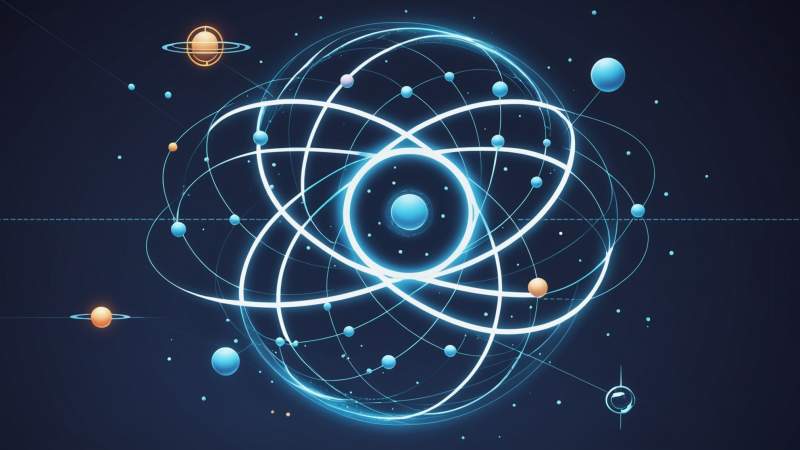
World Quantum Day is an annual event celebrated on 14 April to promote understanding of quantum science and technology among the general public. It aims to engage society in discussions about the fundamental nature of the universe as described by quantum mechanics.
Quantum mechanics, developed in the early 20th century by scientists such as Max Planck and Albert Einstein, describes physical phenomena at atomic and subatomic scales. This field marked a significant shift from classical to modern physics, influencing many areas of science and technology.
The date 14 April was chosen to reflect the first three digits of Planck’s constant, a fundamental physical constant central to quantum mechanics. Worldwide events include lectures, lab tours, and debates organised by universities, research centres, and scientific communities to showcase the impact of quantum science.
Date and Symbolism of the Celebration
World Quantum Day is observed annually on 14 April. The event was launched in 2021, with the first official celebration taking place on 14 April 2022. The choice of this date is closely linked to the rounding of the first three digits of Planck’s constant expressed in electronvolts (eV). Planck’s constant, a fundamental constant in quantum mechanics, has a value of 4.135667696 × 10⁻¹⁵ eV·s. This constant plays a crucial role by relating energy to frequency. Moreover, Planck’s constant is one of three fundamental physical constants that define the kilogram, the primary unit of mass in the metric system. The other two constants involved in defining the kilogram are the speed of light and a specified frequency of a cesium atomic transition. The metric system, which includes the kilogram, is widely used globally in commerce, engineering, and science.
Celebrations in Australia
In Australia, World Quantum Day is marked by a variety of events organised by leading academic and research institutions. The Australian National University hosts activities on 14 April to engage the public and the scientific community in the significance of quantum science. Similarly, the University of New South Wales contributes to the celebrations by offering lectures and guided tours of its laboratories, providing insight into ongoing quantum research. The CSIRO Quantum Computing Centre also participates in the global observance, highlighting Australia’s role in advancing quantum technologies. Notably, in 2022, Sydney was the venue for a conference dedicated to quantum technologies held in conjunction with World Quantum Day, underscoring the country’s active involvement in this international event.
Objectives and Organisation of the Celebration
World Quantum Day is dedicated to helping the general public gain a better understanding of quantum science and technology. This initiative aims to engage society in discussions about quantum science, fostering awareness and interest across diverse audiences. As a decentralised effort, World Quantum Day allows anyone to organise their own celebrations, promoting widespread participation. Events are hosted by a broad range of contributors, including scientists, engineers, technologists, science communicators, educators, content creators, and entrepreneurs. These activities are supported by various institutions and organisations worldwide, from CERN to universities, reflecting a global commitment to the cause. The celebrations typically feature open lectures, informational talks, debates, laboratory tours, and interviews, providing multiple avenues for public engagement and education in quantum science.
Fundamentals of Quantum Mechanics
Quantum mechanics is the branch of physics that studies nature at its most fundamental level. It describes the physical properties of matter and energy on the scale of atoms and subatomic particles, providing a framework that departs significantly from classical physics. The development of quantum mechanics in the early twentieth century marked a pivotal transition from classical to modern physics. This modern physics framework encompasses quantum mechanics alongside the general and special theories of relativity. The origins of quantum theory trace back to 1900, when German physicist Max Planck introduced the first quantum hypothesis. Planck’s groundbreaking ideas were further developed by notable scientists including Albert Einstein, Jean Baptiste Perrin, Gilbert N. Lewis, Arthur Haas, Hendrik Lorentz, and John William Nicholson, who collectively advanced the understanding of quantum phenomena.
Contemporary Significance and Technologies
Over recent decades, quantum science has significantly expanded, particularly in fields such as information technology. Quantum computing stands out as a prominent area of scientific research globally, with investigations conducted both in academic institutions and the private sector. Events held on World Quantum Day highlight how quantum physics aids in understanding the fundamental nature of reality. These activities also demonstrate the role of quantum physics in driving technological development. Quantum technologies are accelerating scientific and technological progress, which in turn has a profound impact on society.