World Bread Day and Its Global Significance
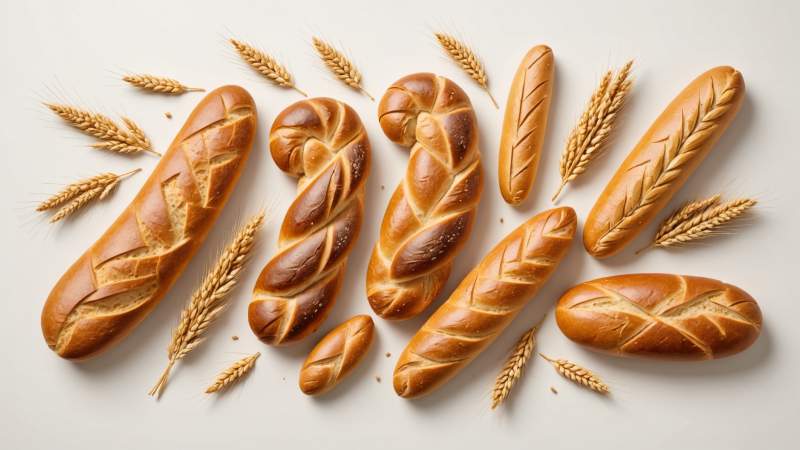
World Bread Day is observed every year on 16 October, established by the International Union of Bakers and Confectioners. This day celebrates bread as one of the most widespread and essential food products globally — a staple consumed daily by an estimated 3.5 billion people across every continent.
Bread has a history spanning at least 14,000 years, originating in the Neolithic period as a baked mixture of grain and water. Yeast-leavened bread likely first appeared in Ancient Egypt around 3,000 BCE, when bakers discovered that wild fermentation could produce a lighter, more digestible loaf. Today, hundreds of distinct regional varieties are produced using grains and starchy plants found on every inhabited continent.
The date of 16 October was chosen to coincide with the founding anniversary of the United Nations Food and Agriculture Organization (FAO), established in 1945, reflecting bread’s central role in food security and the global fight against hunger.
As food historians and nutrition researchers consistently note, no single food product has shaped human civilisation, trade routes, and religious ritual more profoundly than bread — its production marks the transition from nomadic foraging to settled agricultural society.
Date and International Context
World Bread Day is observed annually on 16 October, an initiative established by the International Union of Bakers and Confectioners. The choice of this date carries deliberate significance: it marks the founding anniversary of the Food and Agriculture Organization of the United Nations (FAO), created on 16 October 1945 with the primary mission of combating global hunger.
The FAO’s Latin motto — “Fiat panis” — translates as “Let there be bread,” a phrase that encapsulates the organisation’s founding vision. It is a pointed reminder that bread is not merely a food category but a symbol of access to nutrition itself. Critically, 16 October is also recognised internationally as World Food Day within the United Nations system of observances, directly linking World Bread Day to a broader effort to address food insecurity, sustainable agriculture, and equitable food distribution worldwide.
This overlap is not coincidental — it reinforces the message that bread production, wheat supply chains, and cereal crop health are inseparable from the FAO’s annual agenda on nutrition and rural development.
Celebration Features in Australia
In Australia, World Bread Day carries a distinctively local character. Celebrations place special emphasis on damper — a traditional bread with deep roots in Aboriginal culture, historically made from ground wattle seeds, water, and native grains, then baked directly on hot coals or stones. Damper’s prominence on this day is significant: it reconnects modern Australians with one of the continent’s oldest culinary traditions, predating European settlement by thousands of years.
Bakeries in Melbourne and Sydney mark the occasion by organising community tastings that showcase the country’s multicultural bread landscape — including sourdough, Turkish pide, Italian ciabatta, Jewish challah, and Vietnamese bánh mì. These events mirror Australia’s diverse migrant communities and the way each has contributed its own baking heritage to the national food culture.
The day also prompts Australian grain farmers to run social media campaigns highlighting sustainable wheat-growing practices — particularly relevant given Australia’s position as one of the world’s top five wheat exporters. Families participate by baking damper at home or visiting farmers’ markets, where sharing bread with neighbours reinforces its enduring symbolism of hospitality and community cohesion.
History and Origin of Bread
The history of bread is one of the longest continuous narratives in human food culture. Archaeological evidence from the Shubayqa site in Jordan shows that hunter-gatherers were baking flatbreads from wild cereals as far back as 14,400 years ago — predating agriculture itself. This discovery, published in 2018, fundamentally revised the timeline of bread production, suggesting that bread-making may have actually encouraged the cultivation of cereal crops rather than simply resulting from it.
The earliest breads were simple unleavened flatbreads: ground grain mixed with water and cooked on a hot stone surface. A major turning point came in Ancient Egypt around 3,000 BCE, when bakers noticed that dough left to rest would rise due to wild airborne yeasts. This accidental discovery of leavening through fermentation produced a lighter, more flavourful loaf — and gave rise to the professional baker as a distinct occupation in Egyptian society.
By the Roman era, industrial-scale bakeries (known as pistrina) operated across the empire, and bread had become a cornerstone of urban food supply — famously enshrined in the Roman policy of “panem et circenses” (bread and circuses). These early developments in bread production underscore its role not just as nourishment, but as an organising force in human civilisation.
Composition and Variety of Bread
Bread’s extraordinary diversity stems from the wide range of base ingredients used across cultures. The primary building block is always a starchy carbohydrate source — most commonly a cereal grain — combined with a liquid and, in leavened varieties, a raising agent such as yeast or a sourdough starter.
| Base Ingredient | Common Bread Type | Primary Region |
|---|---|---|
| Wheat | Sourdough, baguette, ciabatta | Europe, Middle East, global |
| Rye | Pumpernickel, dark rye loaf | Northern and Eastern Europe |
| Maize (corn) | Cornbread, tortilla | Americas |
| Sorghum / Millet | Injera, kisra | Sub-Saharan Africa |
| Rice | Rice bread, mochi | East and Southeast Asia |
| Cassava root | Cassava bread, pão de queijo base | Latin America, West Africa |
| Breadfruit | Breadfruit flatbread | Pacific Islands, Caribbean |
| Wattle seed (Acacia) | Damper | Australia (Aboriginal tradition) |
Beyond the base grain, additional ingredients shape texture, flavour, and nutritional value. These commonly include:
- Salt — controls yeast activity and enhances flavour
- Fats (butter, olive oil, lard) — improve crumb softness and shelf life
- Eggs — add richness and structure (brioche, challah)
- Seeds and nuts — contribute texture and micronutrients
- Spices and herbs — define regional character (caraway in rye, za’atar in Middle Eastern flatbreads)
This diversity reflects not only local ingredient availability but centuries of culinary adaptation — each traditional recipe preserving a community’s relationship with its land and agricultural heritage.
The Significance and Symbolism of Bread
World Bread Day is dedicated to honouring bread as one of the most universal and consequential food products in human history. Its significance operates on at least three distinct levels: nutritional, cultural, and spiritual.
Nutritionally, bread remains a primary calorie source for a large portion of the global population, particularly in regions where wheat, maize, and sorghum form the backbone of daily diet. Wheat-based bread alone supplies roughly 20% of total caloric intake globally, according to FAO estimates.
Culturally, bread embodies collective labour — the sowing, harvesting, milling, and baking that underpin agricultural society. The phrase “breaking bread” has entered dozens of languages as a metaphor for sharing, reconciliation, and trust. In this sense, bread is not merely eaten; it is exchanged as a social act.
Spiritually, bread occupies a central place in major world religions:
- Christianity — bread is consecrated as the body of Christ in the Eucharist, one of the faith’s most sacred rites
- Judaism — challah is blessed on Shabbat; unleavened matzah recalls the Exodus from Egypt during Passover
- Islam — bread is considered a gift from God (ni’ma); wasting it is discouraged as disrespectful
- Hinduism and Buddhism — flatbreads such as roti and naan are offered in devotional contexts across South Asia
This layered significance — as sustenance, symbol, and sacred object — is precisely why a dedicated international day resonates so broadly. World Bread Day is, at its core, a reminder that something as everyday as a loaf of bread carries the weight of human history within it.