
Mismatch Clothing Day and Its Role in Fashion Expression
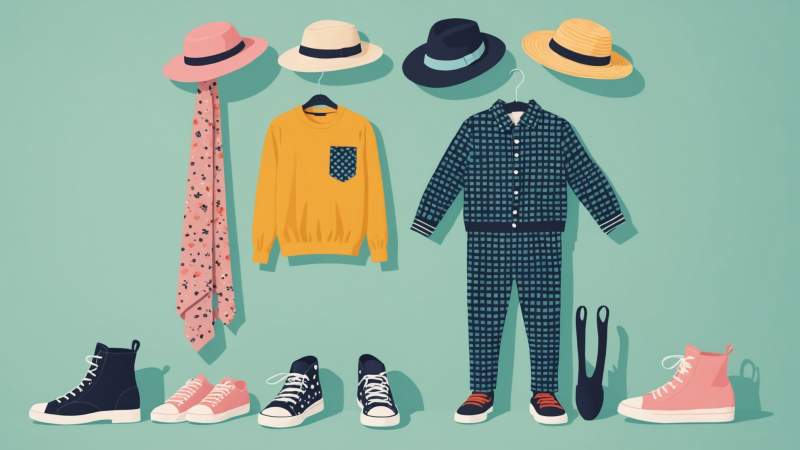
Mismatch Clothing Day is celebrated on the fourth Thursday of January each year, inviting individuals to dress in bright, unmatched clothing from head to toe. This day explicitly discourages neutral colours — white, black, grey, dark blue, and brown — precisely because these shades blend too easily with almost anything, undermining the playful spirit of the occasion.
The event encourages mixing colours, prints, and textures without restrictions, treating fashion as a canvas for creative self-expression rather than a purely functional necessity. Far from being a trivial dress-up exercise, Mismatch Clothing Day reflects a broader cultural shift: clothing has evolved over millennia from basic protection into one of the most visible ways people communicate identity and individuality.
In Australia, the celebration resonates strongly with local fashion culture, which is already characterised by bold colour combinations, Indigenous Australian patterns, and a growing commitment to sustainable materials and ethical production.
Date and Traditions of Mismatch Clothing Day
Mismatch Clothing Day falls on the fourth Thursday of January every year. The core tradition is straightforward — wear the most deliberately mismatched outfit you can assemble, from shoes to hat, with no apologies for clashing colours or conflicting prints.
As fashion commentators often observe, the most liberating thing about Mismatch Clothing Day is that the only rule is to break the rules: the bolder and more incongruous the combination, the better you are doing it.
Common ways to participate include:
- Building a head-to-toe mismatched ensemble using items already in your wardrobe
- Experimenting with two or more clashing prints in a single outfit (for example, stripes paired with florals)
- Adding bold accessories — chunky belts, brightly coloured scarves, or patterned socks — to amplify the effect
- Photographing your outfit and sharing it on social media to inspire others
- Purchasing a statement piece in an unexpected colour or print to mark the occasion
The only colours that are actively discouraged are the neutrals — white, black, grey, dark blue, and brown — because they harmonise too readily with other shades and therefore defeat the purpose of the celebration.
How Mismatch Clothing Day Is Celebrated in Australia
Australia’s climate, cultural diversity, and distinctive design heritage make Mismatch Clothing Day a particularly fitting celebration. Several features of Australian fashion align naturally with the holiday’s ethos.
| Australian Fashion Feature | How It Connects to Mismatch Clothing Day |
|---|---|
| Bold, sun-inspired colour palettes | Encourages the bright, clashing combinations the day celebrates |
| Indigenous Aboriginal motifs and patterns | Introduces culturally rich geometric and dot-work prints into unconventional combinations |
| Sydney and Melbourne street-fashion scenes | Urban hubs where mismatched dressing is already embraced as self-expression year-round |
| Sustainable and recycled-fabric design | Aligns with the trend of repurposing existing garments in unexpected ways |
| School and university themed dress days | Educational institutions use the concept to promote creativity and individuality |
Australian designers have long been recognised internationally for their willingness to clash prints and saturate their palettes — qualities that sit perfectly within the Mismatch Clothing Day framework. The incorporation of Aboriginal cultural motifs, used with appropriate respect and attribution, adds a layer of meaning that elevates mismatched dressing beyond mere novelty into genuine cultural expression.
Across Australian schools and youth communities, Mismatch Clothing Day-style themed events are a well-established practice, reinforcing the idea that unconventional dressing fosters confidence and creative thinking from an early age.
The History and Origin of Clothing
Understanding why Mismatch Clothing Day matters requires stepping back to consider how clothing has evolved over an enormous span of time. The oldest known evidence of clothing use dates to approximately 114,000 years ago, based on analysis of animal hides processed by early humans. The original function was entirely protective: shielding the body from rough terrain, insects, extreme temperatures, ultraviolet radiation, and harmful substances.
A pivotal technological leap came with the development of woven textiles. The Tarkhan Dress, discovered in an Egyptian tomb and dated to roughly 3,500 BCE (approximately 5,500 years ago), is among the oldest surviving woven garments. Its existence demonstrates that humans were creating structured, tailored clothing thousands of years before the concept of “fashion” existed in any recognisable form.
The Evolution and Social Significance of Clothing
As human societies grew more complex, clothing took on roles far beyond physical protection. Two developments illustrate this shift particularly well:
- The introduction of pockets — an innovation that gained widespread adoption during periods of military conflict, allowing soldiers and civilians alike to carry personal items while keeping their hands free. This small functional addition reflected how clothing adapted to changing lifestyles.
- The emergence of clothing as a social signal — the covering of the body in public became a cultural norm, and the style and quality of garments began to communicate wealth, status, and group membership. A peasant’s clothing and a nobleman’s clothing in medieval Europe conveyed their social positions as clearly as any spoken declaration.
Over centuries, clothing gradually evolved from a marker of necessity and status into a medium for personal identity. This long arc of development is precisely what makes events like Mismatch Clothing Day culturally meaningful: they represent the endpoint of a journey from animal hides worn for survival to deliberate aesthetic choices worn for joy.
The Development of Fashion and the Clothing Industry
The formalisation of fashion as an industry began in France during the 1800s, when designers started establishing dedicated fashion houses. The most influential early figure was Charles Frederick Worth, who founded his fashion house in Paris in 1858. Worth is widely credited with introducing the concept of the designer as a creative authority — someone whose vision, rather than a client’s instructions alone, drove garment design. His innovations in materials and silhouette generated mass public interest in fashion for the first time.
Key milestones in the industry’s development include:
- 1858: Charles Frederick Worth founds his Paris fashion house, establishing the modern concept of haute couture
- Late 19th – early 20th century: Mass production technology makes fashionable clothing accessible beyond the aristocracy
- Mid-20th century: Distinct clothing categories emerge — sportswear, workwear, casual wear — reflecting increasingly segmented consumer lifestyles
- 1970s: The prevailing fashion motto becomes “Satisfy Yourself,” prioritising personal expression over rigid style rules
- 21st century: Formerly “taboo” combinations — mismatched prints, clashing colours — are embraced by luxury brands including major European and American fashion houses
The acceptance of mismatched clothing by high-end fashion is significant: it confirms that what once seemed like a style mistake is now a recognised and deliberate aesthetic. Mismatch Clothing Day both reflects and reinforces this evolution.
Rules and Tips for Wearing Mismatched Clothing Successfully
In fashion terminology, “mismatched” describes garment components that do not conventionally complement each other — yet the art lies in making that incongruity look intentional rather than accidental. Professional stylists offer several practical guidelines:
- Use a chunky belt or strong accessory as a visual anchor. A bold belt between a clashing top and bottom creates a deliberate break that signals the mismatch is a choice, not an oversight.
- Apply the traditional three-colour rule as a starting framework. Classic style guidelines recommended no more than three colours in a single outfit; using this as a loose reference point helps prevent combinations that feel overwhelming rather than playful.
- Vary the scale of prints. Pairing a large-scale pattern (such as oversized florals) with a smaller-scale one (such as fine stripes) creates contrast without visual chaos.
- Tie combinations together with a repeated colour. Even in a deliberately mismatched outfit, repeating one colour across two or more items provides a subtle thread of cohesion.
- Commit fully to the look. Half-hearted mismatching reads as an accident; deliberate, confident choices read as a statement.
The underlying principle is confidence: mismatched dressing works best when the wearer treats their outfit as a deliberate artistic decision rather than an apology. This is, ultimately, the spirit that Mismatch Clothing Day — and decades of fashion evolution — is designed to celebrate.