International Elephant Protection Day in Zoos and Captive Welfare
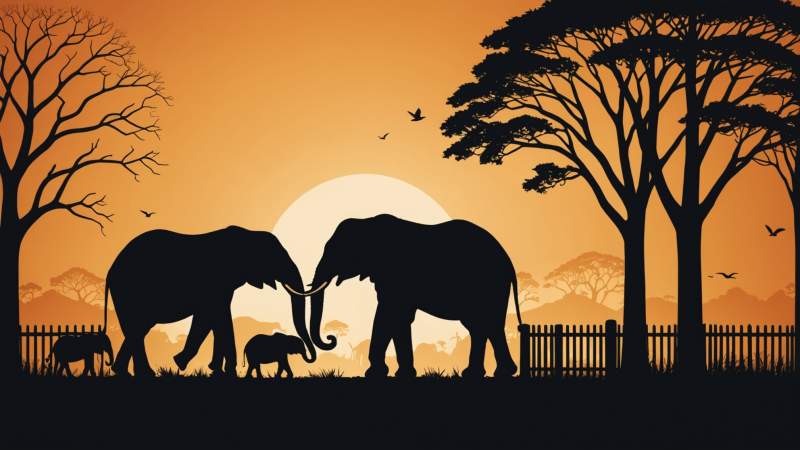
International Elephant Protection Day is observed every year on 20 June to draw attention to the conditions of elephants kept in zoos. The event was initiated by the organisation In Defence of Animals in 2009 to advocate for the rights and welfare of captive elephants across the globe.
Supporters of keeping elephants in zoos argue that these facilities protect the animals from threats like poaching, predators, and natural disasters, while ensuring reliable access to food and water. However, peer-reviewed research indicates that elephants in captivity often suffer from serious health problems and have significantly shorter lifespans compared to their wild counterparts — sometimes by decades.
The day highlights issues such as limited movement, social isolation, chronic stress, and difficulties in reproduction experienced by captive elephants. It also promotes efforts to improve their living conditions and ultimately aims to end the practice of keeping elephants in zoos altogether.
Date and Status of the Commemorative Day
International Elephant Protection Day in Zoos is observed annually on 20 June. Despite growing recognition since its founding in 2009, the day currently holds no official United Nations status. The organisers remain hopeful that the UN will eventually grant it formal recognition, which would significantly elevate its influence on international animal welfare policy.
History and Goals of International Elephant Protection Day
The day was initiated by the US-based organisation In Defence of Animals in 2009. Its primary purpose is to raise awareness about the rights of elephants kept in captivity and to put pressure on zoos — particularly American ones — to comply with animal welfare legislation.
The ultimate goal is to secure the release of elephants from zoos and to end their long-term confinement in such facilities. Each year, In Defence of Animals publishes its widely cited “Ten Worst Zoos for Elephants” list, naming specific institutions that fail to meet acceptable standards of care. This annual list has become a key advocacy and accountability tool, generating media attention and pushing zoo authorities to make reforms.
As animal welfare researchers consistently note, public accountability — including naming specific institutions that fail minimum care standards — remains one of the most effective drivers of reform in captive elephant management.
Challenges of Keeping Elephants in Captivity
The welfare of elephants in captivity presents profound challenges that directly impact their health and longevity. The data is stark:
| Metric | Captive Elephants | Wild Elephants |
|---|---|---|
| Average lifespan | Rarely beyond 17 years (zoo study, Canadian zoologists) | Up to 56 years (Amboseli National Park, Kenya) |
| Daily distance travelled | Minimal — often less than 1 km | Up to 80 km per day |
| Social structure | Often isolated or in small, unrelated groups | Complex multigenerational family herds |
| Calf survival support | Mother alone, limited support | Entire family group assists during birth |
Research conducted by Canadian zoologists revealed that elephants in zoos rarely live beyond 17 years — a figure that contrasts sharply with the average lifespan of up to 56 years recorded for elephants in Kenya’s Amboseli National Park. Scientists attribute the dramatically reduced lifespan of captive elephants to several interconnected factors:
- Hypodynamia (physical inactivity): In the wild, elephants travel tens of kilometres daily, exercising muscle groups and maintaining bone density. This level of activity is rarely replicated in zoo enclosures.
- Neuroses and psychological stress: Isolation from natural social structures triggers chronic stress responses, leading to stereotypic behaviours such as repetitive swaying or head-bobbing.
- Arthritis and foot disease: Hard enclosure surfaces and restricted movement contribute to musculoskeletal conditions that are among the leading causes of euthanasia in captive elephants.
- Reproductive failure: Wild elephant births are communal events — the mother receives assistance from experienced female relatives. Captive females lack this support, resulting in significantly higher calf mortality rates in zoo settings.
Wild elephants live in complex, multigenerational family groups that provide essential social support and learned behaviours. Zoo elephants kept in isolation or incompatible groupings frequently develop aggression and neurotic behaviours, further undermining their welfare.
Arguments of Supporters of Keeping Elephants in Zoos
Proponents of captive elephant programmes put forward several arguments in defence of zoo keeping:
- Protection from poaching: African elephant populations declined by around 30% between 2007 and 2014 due to illegal ivory trade. Supporters argue zoos offer a haven from this threat.
- Elimination of natural predators: Young elephants in the wild face predation from lions and crocodiles; this risk is absent in captivity.
- Reliable nutrition and veterinary care: Zoos provide consistent access to food, water, and medical treatment — resources that can be scarce during droughts or ecological disruption in the wild.
- Conservation breeding programmes: Some institutions participate in coordinated breeding programmes intended to maintain genetic diversity for potential future reintroduction efforts.
However, critics point out that conservation goals can often be better achieved through protected habitat programmes and anti-poaching initiatives than through captive breeding, and that the welfare costs to individual animals remain difficult to justify.
Situation and Initiatives in Australia
In Australia, the captivity of elephants in zoos remains a subject of active debate concerning animal rights and welfare reform. Several Australian zoos — including Taronga Zoo in Sydney — participate in international conservation programmes aimed at both protecting elephants and improving their living conditions in captivity. These institutions have introduced environmental enrichment techniques specifically designed to reduce stress and improve physical health outcomes for captive elephants.
Beyond captive care, Australia has developed specialised rehabilitation programmes for elephants released from zoos or circuses, reflecting a broader commitment to welfare that extends beyond traditional zoo settings. Educational campaigns are regularly conducted nationwide to raise public awareness about the challenges faced by elephants in captivity and to build support for the objectives of International Elephant Protection Day.
Australian researchers also contribute to global scientific efforts, participating in studies that examine elephant health and behaviour both in the wild and in captivity. This evidence-based research informs ongoing welfare improvements within Australian zoos and supports policy advocacy at both national and international levels.