National Scone Day and British Scone Traditions
National Scone Day is celebrated every year on 30 May, recognising the cultural significance of scones in British cuisine. Scones are a type of baked good that originated in the United Kingdom and have become popular in many former British colonies worldwide.
Traditionally, scones were made from unleavened dough, cooked on a griddle, and served in triangular portions. Today, scones are typically baked with leavening agents and can vary widely in shape and flavour, including sweet and savoury options.
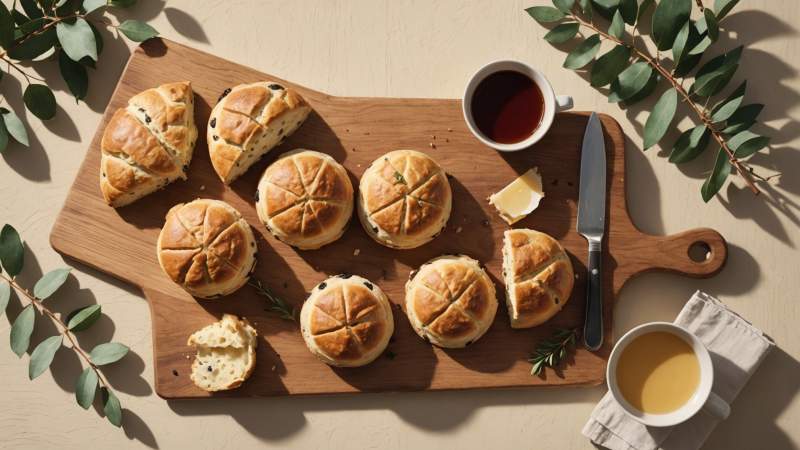
Scones are often enjoyed as part of afternoon tea, accompanied by clotted cream and jam, a custom known as Cornish or Devonshire cream tea. Regional variations include pumpkin scones in Australia, cheese scones in New Zealand, and potato scones in Scotland.
Date of Celebration
National Scone Day is celebrated annually on the 30th of May. This fixed date marks a dedicated occasion each year to honour and recognise the cultural significance of scones. Observing the day on the same date annually allows enthusiasts and communities to consistently commemorate the tradition associated with this iconic baked good.
Popularity and Varieties in Australia
In Australia, pumpkin scones hold a special place in the nation’s culinary landscape and enjoy widespread popularity. These scones were invented in the 19th century and have since become a national dish, reflecting the country’s unique adaptation of traditional scone recipes. Australian pumpkin scones are made using a combination of pumpkin purée, flour, sugar, milk, and butter, which together create a distinctive flavour and texture. Typically, they are served warm, accompanied by butter or honey, enhancing their comforting and rich taste. This variety of scone exemplifies Australia’s contribution to the broader tradition of scone-making, highlighting both local ingredients and preferences.
History and Geography of Scones
The term ‘scone’ refers broadly to various types of sweet baked goods within the United Kingdom. Scones hold particular popularity in England and Scotland, where they have long been a staple of local cuisine. Their appeal extends beyond the British Isles, as scones are also enjoyed in many former British colonies around the world. Historically, scones were made from unleavened dough shaped into flat, round cakes. Unlike the modern baking methods, these early scones were traditionally cooked on a griddle or frying pan rather than baked in an oven. When served, scones were typically cut into triangular portions, a practice that has persisted in some regions to this day. This historical and geographical context highlights the evolution and spread of scones as a beloved British baked good.
Modern Characteristics and Varieties
Modern scones are typically prepared using baking powder as a leavening agent, which contributes to their light and fluffy texture. Unlike traditional forms, contemporary scones come in a wide range of shapes, reflecting both creativity and regional preferences. They are widely available across shops and bakeries throughout the United Kingdom, attesting to their enduring popularity. Despite this commercial availability, many home bakers continue to make scones from scratch, often relying on cherished family recipes passed down through generations. The flavour profile of scones generally leans towards moderately sweet or neutral, making them versatile for various accompaniments. In addition to the classic sweet versions, savoury scones have also gained recognition, with notable regional varieties such as cheese scones in New Zealand and potato scones in Scotland. Raisins are a common inclusion in many scone recipes, adding a subtle sweetness and texture contrast. These diverse forms and flavours highlight the adaptability of scones in contemporary culinary practice.
Serving Traditions and Tea Rituals
Scones are traditionally served by cutting them in half and spreading fillings on each half. A well-known custom involving scones is the Cornish tea, Devonshire tea, or cream tea, where scones are accompanied by clotted cream and jam. During this tea ritual, each scone half is generously spread with thick clotted cream, followed by a layer of strawberry jam on top. Notably, butter is not served in this context. The tea itself is typically prepared with the addition of milk. Beyond the cream tea, scones are also commonly served as part of afternoon tea, alongside sandwiches and small pastries. In this setting, whipped cream is traditionally used instead of clotted cream, distinguishing the afternoon tea presentation from the cream tea tradition.
Ingredients for Classic English Scones
The preparation of classic English scones begins with a precise selection of ingredients. Essential components include one egg, two cups of flour, four teaspoons of baking powder, two-thirds of a cup of milk, a quarter teaspoon of sugar, six tablespoons of butter, and half a teaspoon of salt. The dry ingredients—flour, baking powder, salt, and sugar—are first combined thoroughly. Butter is then incorporated into this mixture, which is blended until no lumps remain; a blender may be used to achieve a smooth consistency. Separately, the egg and milk are whisked together, with two tablespoons of this mixture set aside for later use. The remaining egg and milk mixture is then added to the dry ingredients, and the dough is gently mixed until it reaches a slightly sticky texture. This careful combination of ingredients and mixing techniques forms the foundation for the traditional English scone dough.
Dough Preparation and Baking
The preparation of scone dough begins with placing it onto a floured surface to prevent sticking. The dough is then rolled out into a flat sheet approximately 2 to 3 centimetres thick. From this sheet, circular shapes of the desired size are cut out using a glass or a pastry cutter. These dough rounds are carefully arranged on a baking tray lined with parchment paper to ensure even cooking and easy removal. Before baking, the scone tops are brushed with a reserved egg and milk mixture, which helps achieve a golden, glossy finish. The tray is then placed in a hot oven for about 15 minutes. The scones are considered done when they have risen to two to three times their original size and have developed a light brown colour. Once baked, the scones are traditionally served with jam and clotted cream or butter, completing the classic British scone experience.