
International Holocaust Remembrance Day Commemoration
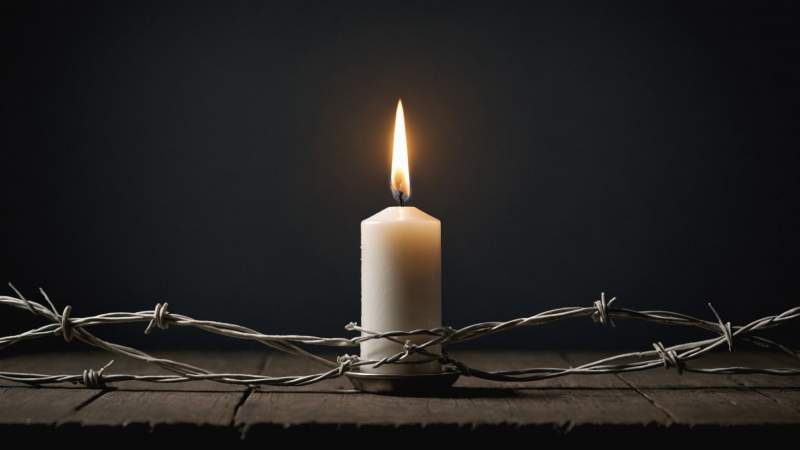
International Holocaust Remembrance Day is held annually on 27 January to honour the victims of the Holocaust. This date was chosen to mark the liberation of the Auschwitz concentration camp by Soviet troops in 1945.
The United Nations General Assembly established this day in 2005 during a special session commemorating the 60th anniversary of Auschwitz’s liberation. The camp was a site of mass murder where millions, primarily Jews, were systematically exterminated.
Holocaust Remembrance Day recognises the suffering of six million Jews and other groups targeted during the Holocaust, including Roma, Poles, Soviet prisoners of war, and others. Different countries observe related remembrance days on dates significant to their own histories.
Date and Establishment of the Remembrance Day
International Holocaust Remembrance Day is observed annually on 27 January. This date was chosen to mark the anniversary of the liberation of the Auschwitz concentration camp by Soviet forces. The United Nations General Assembly officially established the International Holocaust Remembrance Day in 2005. That same year, a special session of the General Assembly was held to commemorate the sixtieth anniversary of the liberation of Auschwitz. The designation of 27 January as the day of remembrance serves to honour the victims of the Holocaust and to promote awareness of the atrocities committed during this period.
Australia’s Role in Establishing the Remembrance Day
Australia played a significant role as one of the initiators of the United Nations General Assembly resolution in 2005 that established the International Holocaust Remembrance Day on 27 January. This initiative demonstrated Australia’s commitment to recognising the importance of commemorating the victims of the Holocaust on a global scale. By supporting and helping to drive the resolution, Australia contributed to the formalisation of a day dedicated to honouring the memory of those who suffered and perished during this tragic period in history.
Liberation of Auschwitz Concentration Camp
The Auschwitz concentration camp was liberated by Soviet troops under the command of Marshal Koniev. At the time of liberation, approximately 7,600 prisoners remained in the camp. Auschwitz is historically recognised as one of the most notorious sites of mass extermination during the Holocaust. Historians estimate that between 1.1 and 1.6 million people were killed there, with the majority of the victims being Jewish. The liberation of Auschwitz marked a significant moment in the history of the Holocaust, revealing the extent of the atrocities committed within the camp.
Scale and Victims of the Holocaust
The Holocaust resulted in the deaths of approximately six million Jews, representing a devastating loss that accounted for 60 percent of the European Jewish population and about one-third of the global Jewish community. This catastrophic event is most commonly associated with the destruction of European Jewry. However, the victims of the Holocaust extended beyond the Jewish population. Other groups targeted and murdered included Roma (Gypsies), Poles, Soviet prisoners of war, Black German citizens, individuals with mental illnesses, the disabled, and homosexuals. The scale of these atrocities reflects the widespread and systematic nature of the persecution carried out during this dark chapter of history.
Features of Holocaust Remembrance Days in Different Countries
Holocaust Remembrance Days are observed on different dates across various countries, each reflecting significant historical events related to the Holocaust within their national contexts. In Israel, the day is known as Yom HaShoah VeHaGvurah, or the Day of Catastrophe and Heroism. It is commemorated on the 27th of the Hebrew month of Nisan, a date chosen to mark the anniversary of the Warsaw Ghetto Uprising, a pivotal act of Jewish resistance during World War II.
Hungary observes its Holocaust Remembrance Day on 16 April, which corresponds to the anniversary of the commencement of the mass deportation of Hungarian Jews to ghettos in 1944. This date serves as a solemn reminder of the tragic escalation of persecution within the country.
In Latvia, the day is marked on 4 July, commemorating the burning of the Riga synagogues in 1941, where many Jews were trapped inside. This event stands as a stark symbol of the violence inflicted upon the Jewish community during the Holocaust.
Romania’s Holocaust Remembrance Day falls on 9 October, the anniversary of the beginning of the deportations of Jews from Romania, Moldova, and Bukovina to ghettos and concentration camps in 1941. This date highlights the regional dimension of the Holocaust and the suffering endured by Jewish populations in these areas.
These varied dates and commemorations underscore the diverse historical experiences of the Holocaust across different countries, each choosing a day that resonates deeply with their national history and collective memory.